
Heating
What Homeowners Should Know Before Choosing or Troubleshooting a Heat Pump
Climate, the building envelope, ducts, electrical capacity, sizing, controls and installation quality all affect comfort and operating cost.
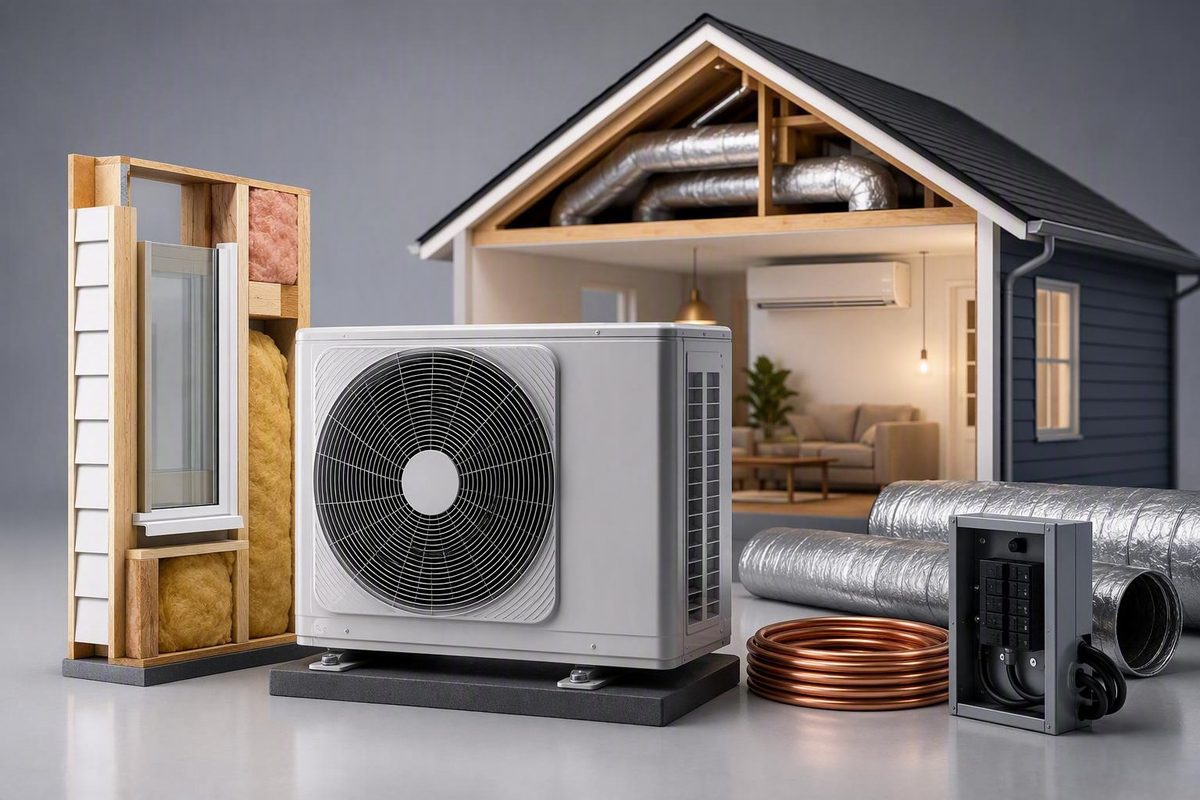
A heat pump can be an efficient way to heat and cool a home, but the appliance itself is only part of the decision. Climate, the building envelope, ductwork or ductless distribution, electrical capacity, equipment sizing, controls, and installation quality all influence comfort and operating cost.
That is why a heat pump should be evaluated as part of a house—not as an isolated box with an impressive efficiency number. Before buying, ask how the proposed equipment performs under local winter conditions, what the home’s calculated load is, whether backup heat is needed, and exactly what the installed price includes. If you already own one, learning what normal operation looks like can help you separate useful observations from symptoms that require professional service.
What a heat pump is—and how it finds heat in cold air
A heat pump is an electrically powered system that transfers heat from one place to another. Unlike a fuel-burning furnace or boiler, it does not produce indoor heat through combustion. Its operating principle is closer to a refrigerator: a refrigerator moves heat from inside its cabinet into the surrounding room, while a reversible home heat pump can move heat either into or out of a house.
Cold outdoor air still contains thermal energy. Refrigerant circulating through the heat pump can absorb some of that energy even when the temperature is below freezing. As outdoor temperature falls, however, collecting heat generally becomes more difficult. Heating output and efficiency may decline, depending on the equipment and operating conditions.
The central parts of a common vapor-compression heat pump include:
- Refrigerant, which circulates and changes pressure and state as it absorbs and releases heat
- A compressor, which raises the refrigerant’s pressure and temperature
- Indoor and outdoor heat exchangers, often called coils
- An expansion device, which reduces refrigerant pressure
- Fans or blowers, which move air across the coils
- A reversing valve, which changes refrigerant-flow direction in a heating-and-cooling system
In heating mode, low-temperature refrigerant absorbs heat at the outdoor coil. The compressor raises the refrigerant’s pressure and temperature. At the indoor coil, the refrigerant releases heat into the home. After its pressure is reduced, it returns outdoors and repeats the cycle.
In cooling mode, the transfer runs in the opposite direction. The indoor coil absorbs heat from the home, and the outdoor coil releases that heat outside. This is essentially how an air conditioner cools a building. The International Energy Agency’s explanation of heat-pump operation, published as part of its 2022 heat-pump report, uses the same refrigerator analogy and describes air, ground, water, and waste heat as possible sources.
Because a heat pump moves heat rather than converting all of its electrical input directly into heat, it can deliver more than one unit of heat for each unit of electricity it consumes. That does not mean it creates energy. Electricity operates the compressor, fans, and controls, enabling the system to collect additional thermal energy from another source.
Air-source, ductless, geothermal, cold-climate, and dual-fuel options
Heat-pump terminology becomes easier when two different questions are separated:
- Where does the system exchange heat?
- How does it distribute conditioned air or heat inside the home?
“Air-source” and “ground-source” answer the first question. “Ducted” and “ductless” answer the second. A ductless mini-split, for example, is usually an air-source heat pump. Ductless and air-source are not competing categories.
Air-source heat pumps
An air-source heat pump exchanges heat with outdoor air. It typically has an outdoor unit connected by refrigerant lines to an indoor air handler, coil, or one or more ductless heads. Air-source systems are a common residential configuration and can be installed in either ducted or ductless form.
Ducted central heat pumps
A central heat pump usually connects to an indoor air handler and distributes heated or cooled air through ducts. This can be a straightforward fit when a home already has appropriately sized, reasonably tight ductwork.
Existing ducts should not automatically be assumed suitable. The installer should assess their size, leakage, insulation, restrictions, return-air capacity, and room-to-room distribution. A new heat pump cannot correct undersized, damaged, or poorly balanced ducts by itself.
Ductless mini-splits
A ductless system connects outdoor equipment to one or more indoor units, often called heads. Each head conditions a room or zone directly rather than relying on conventional central ductwork.
Ductless systems may fit:
- Older homes without ducts
- Additions
- Finished basements
- Bonus rooms
- Converted garages
- Areas with persistent room-to-room temperature differences
- Projects where installing extensive new ducts would be disruptive
Multiple heads permit zoning, but the design still matters. Head placement, minimum output, line routing, condensate drainage, and the interaction among zones should all be addressed in the proposal.
Ground-source or geothermal heat pumps
Ground-source systems exchange heat with the ground or water through buried or submerged loops. Ground temperatures are generally steadier than outdoor air temperatures, which can reduce the temperature extremes against which the equipment operates.
The tradeoff is project complexity. Excavation, drilling, land conditions, loop design, and site access can make installation more involved and expensive. Higher efficiency does not guarantee that every project will recover its additional installed cost. The decision requires site-specific design and financial comparison.
Cold-climate heat pumps
A cold-climate heat pump is designed to retain useful heating performance at lower outdoor temperatures. The label is helpful, but it is not enough for equipment selection. A model that can turn on at a very low temperature may still deliver too little heat for a particular house at that condition.
Ask for model-specific heating capacity and efficiency at the local winter design temperature. University of Maryland Extension likewise advises considering cold-weather performance, sizing, electrical capacity, and building condition, rather than relying on a general product category.
Dual-fuel and auxiliary heat
A dual-fuel or hybrid system pairs a heat pump with another heating appliance, commonly a gas furnace. Its controls determine when the heat pump runs and when the furnace takes over or supplements it. This can preserve an existing furnace or provide a second heating source where climate, utility rates, or electrical constraints make that arrangement useful.
Electric resistance strips can also supplement a heat pump. This is called auxiliary heat, but it is not dual fuel: both the heat pump and resistance elements use electricity. Resistance heat can maintain comfort when heat-pump output is insufficient, although longer resistance-heat operation can substantially increase electricity consumption.
| Comparison | Air-source, ducted | Air-source, ductless | Ground-source/geothermal | Dual-fuel air-source |
|---|---|---|---|---|
| Heat source | Outdoor air | Outdoor air | Ground or water | Outdoor air, plus backup fuel |
| Distribution | Central ducts | One or more indoor heads | Usually ducts or hydronic distribution, depending on design | Usually central ducts |
| Typical home fit | Home with usable ductwork | Home without ducts, addition, individual zones, or problem rooms | Site suitable for loops and a larger construction scope | Home retaining or adding a compatible furnace |
| Principal installation consideration | Duct condition and airflow | Head placement, line routing, drainage, and zoning | Drilling or excavation, loop design, and site conditions | Equipment matching, controls, venting, fuel, and electrical requirements |
| Possible backup arrangement | Electric resistance or another system | Built-in resistance heat in some configurations or a separate heating system | Electric resistance or another system | Furnace is the backup or alternate source |
Heat pump vs. air conditioner, furnace, boiler, and resistance heat
A central air conditioner and an air-source heat pump use similar components in cooling mode: refrigerant, a compressor, indoor and outdoor coils, and fans. Both remove heat from the home and release it outdoors. The defining functional difference is that a heat pump can reverse the refrigerant cycle to provide heating. A conventional central air conditioner normally requires a separate heating system.
This distinction changes how prices should be compared. Comparing a heat pump only with an air conditioner ignores the heating function. A whole-system comparison should consider the cost and condition of the heating equipment that must accompany the air conditioner.
Furnaces and boilers generate heat from fuel or electricity. A furnace generally heats air; a boiler generally heats water or produces steam for distribution. Electric baseboards and resistance elements convert electricity directly into heat. A heat pump instead uses electricity to transfer heat.
None of those descriptions determines which option will have the lowest lifetime cost. That depends on the house, climate, fuel and electricity prices, project scope, equipment efficiency, and maintenance or replacement needs.
Common replacement pathways
- Heat pump alone: Potentially appropriate when a correctly sized model can cover the home’s load, with or without limited auxiliary heat.
- Air conditioner plus furnace: May make sense when separate heating is preferred or already planned.
- Dual-fuel heat pump: Combines heat-pump heating and cooling with a furnace.
- Ductless heat-pump zones: Useful where ducts are absent or only certain areas need conditioning.
- Ground-source system: A larger site and construction decision that should be compared on total installed and operating costs.
- Air conditioner while retaining a furnace: Potentially reasonable when the furnace is serviceable and replacing it now adds little practical value.
If both heating and cooling equipment are old, a heat pump can compete as a replacement for two functions. If only the air conditioner has failed and the furnace has substantial useful life, the decision is different. Retaining the furnace may reduce the immediate project scope, or the furnace may be incorporated into a dual-fuel arrangement if the equipment is compatible.
Matched or similarly rated heat pumps and air conditioners should have broadly comparable cooling operation under comparable conditions. In many projects, therefore, the heating plan—not summer cooling—is what changes the economics. Commercial installer marketplace EnergySage makes the same whole-system distinction in its heat-pump and air-conditioner comparison, while noting that existing equipment, insulation, rates, and installation requirements affect the choice.
| Factor | What to examine | Why it changes the decision |
|---|---|---|
| Existing equipment condition | Condition, repair history, safety, and expected remaining usefulness | Replacing two failing systems differs from replacing AC while retaining sound heating equipment |
| Climate | Winter design temperature, summer humidity, and temperature extremes | Determines low-temperature output needs, backup strategy, and runtime |
| Duct availability | Size, leakage, return capacity, insulation, and room distribution | May favor central equipment, duct repairs, or ductless zones |
| Electrical capacity | Service size, panel space, circuits, air handler, and resistance backup | Additional electrical work can affect cost and project timing |
| Heating fuel | Local price, appliance efficiency, fixed charges, and availability | Changes operating-cost comparisons |
| Project scope | Equipment, ducts, wiring, controls, approvals, envelope work, and backup | Prevents an incomplete equipment-only price comparison |
Efficiency ratings without the hype
Heat-pump efficiency is commonly described with COP, SEER2, and HSPF2. Each answers a different question, and none guarantees a particular utility bill.
COP
Coefficient of performance, or COP, is the amount of heat delivered divided by the electricity consumed at stated operating conditions. A COP of 3 means the system delivers approximately three units of heat for each unit of electrical energy used at that condition, as explained in University of Maryland Extension’s heat-pump guidance.
The extra delivered heat is not created from nothing. Most of it is collected from outdoor air, the ground, or another source; electricity powers the transfer.
At a high level, the International Energy Agency characterizes a household heat-pump COP of around four as typical. That is a broad estimate, not a promise for every hour, climate, model, or installation. The IEA’s 2022 heat-pump report also explains that source and delivery temperatures influence performance.
SEER2 and HSPF2
- SEER2 is a seasonal cooling-efficiency metric.
- HSPF2 is a seasonal heating-efficiency metric.
These ratings are useful for comparing equipment under standardized procedures. They do not fully predict performance in a specific house because actual weather, duct losses, controls, installation, and occupant settings differ from rating conditions.
Temperature lift matters
A heat pump works across a temperature difference. The greater the difference between the heat source and the required delivery temperature—the temperature lift—the harder the system generally must work.
On a mild day, extracting heat from outdoor air and delivering moderately warm indoor air may be relatively easy. On a very cold day, the source is colder while the home still needs heat. Efficiency often falls, and available capacity may also decline.
The same principle matters for hydronic systems. A heat pump asked to supply very hot water may operate differently from one serving low-temperature radiant floors or equipment designed around moderate water temperatures.
Why rated and real performance differ
Actual seasonal results can be affected by:
- Outdoor temperature and humidity
- Required indoor or supply temperature
- Equipment sizing and modulation
- Filter condition
- Indoor and outdoor airflow
- Duct leakage or restriction
- Insulation and air sealing
- Thermostat and backup-heat controls
- Defrost operation
- Refrigerant charge and commissioning
- Installation quality
- Occupant schedules and setpoints
This is why “300% efficient” should not be treated as a guaranteed annual result. It is usually shorthand for a COP of 3 at a stated condition. A single COP is one operating snapshot; annual energy use reflects mild weather, cold snaps, defrost cycles, backup heat, and changing building loads.
When reviewing a quote, ask:
What heating capacity and efficiency does this exact outdoor-and-indoor equipment combination provide at our local winter design temperature?
Also ask for the relevant performance table or certified data. A minimum operating temperature merely indicates that equipment can operate there. It does not prove that the equipment can carry the home’s heating load efficiently at that temperature.
Cold-weather performance, backup heat, and normal winter behavior
Modern heat pumps can operate below freezing, but capability varies by model. The useful question is not simply, “Will it run?” It is, “How much heat will it deliver, at what efficiency, when this house needs it most?”
Two model-specific values matter:
- Heating capacity at the local winter design temperature
- COP or another efficiency measure at that condition
Those values must be compared with the home’s calculated heating load. A model that provides enough output for a small, weatherized house may be inadequate for a larger, leakier house in the same climate.
The thermal balance point
Conceptually, a home’s thermal balance point is the outdoor condition below which a particular heat pump may no longer meet the building’s full heating load on its own. The balance point is not universal. It changes with the equipment’s capacity curve and the home’s heat loss.
Weatherization can lower the home’s heating load, potentially shifting the balance point and reducing the need for backup. Selecting a model with stronger low-temperature capacity may do the same. A contractor should evaluate the interaction rather than applying a generic cutoff.
Backup options
Auxiliary electric resistance heat can operate automatically when controls determine that the heat pump needs assistance. It is simple and can provide substantial supplemental output, but it uses electricity differently from the refrigerant cycle. Extensive resistance-heat runtime can materially change expected electricity use.
A backup furnace burns fuel and may be paired with the heat pump in a dual-fuel system. The controls determine when the furnace supplements or replaces heat-pump operation. Dual fuel is one possible strategy, not a universal requirement.
The right backup approach depends on:
- Local winter conditions
- The home’s heat loss
- Low-temperature heat-pump capacity
- Electrical service
- Fuel availability and rates
- Resilience preferences
- The condition of existing heating equipment
- Household goals
Winter behavior that may be normal
A heat pump does not always behave like a furnace. Normal operation can include:
- Longer runtimes during extreme weather. Steady operation may be how variable-capacity equipment matches continuous heat loss.
- Supply air that feels less hot than furnace air. The system can still warm the house if delivered air is above room temperature and airflow is adequate.
- Light frost on the outdoor coil. Moisture can freeze on a cold coil.
- Periodic defrost cycles. The system temporarily clears frost from the outdoor coil; indoor air may briefly feel different.
- Occasional auxiliary-heat operation. Backup may engage during severe weather, recovery from a large setback, or defrost, depending on the controls.
No single symptom proves a fault. Persistent ice that does not clear, inability to recover or hold temperature, absent airflow, repeated breaker trips, or unexpectedly extensive auxiliary-heat use deserves investigation. Heat-pump manufacturer Carrier’s troubleshooting guidance similarly distinguishes light frost and extreme-weather runtime from persistent icing or unresolved performance problems.
Ask the contractor:
- What winter design temperature are you using?
- What is the home’s calculated heating load at that temperature?
- What output does the exact proposed equipment combination retain there?
- What efficiency is expected at that condition?
- What is the estimated thermal balance point?
- When will auxiliary heat or the backup furnace engage?
- How are normal temperature recovery and backup operation configured?
- What happens if one heat source is unavailable?
Is your home ready for a heat pump?
A good heat-pump proposal begins with the home, not a model number. Equipment chosen only from square footage can miss major differences in insulation, windows, air leakage, orientation, occupancy, and duct losses.
Start with a professional load calculation
Ask for room-by-room or whole-home heating and cooling load calculations using an appropriate professional method. The result should inform equipment capacity, staging, air distribution, and backup design.
Bigger is not automatically safer. Oversized equipment may reach the thermostat setpoint quickly but operate in short cycles at lower loads, which can work against even temperatures and summer humidity control. Undersized equipment may rely heavily on backup heat or fail to maintain comfort at design conditions. Variable-capacity equipment broadens the operating range, but it does not eliminate the need for correct design. Homeowners can also review common signs that cooling equipment is oversized before discussing recurring comfort problems with a contractor.
Consider insulation and air sealing first
Insulation and air sealing reduce heat loss in winter and heat gain in summer. That may allow smaller equipment, reduce backup requirements, and improve room-to-room comfort. Planned envelope work should be disclosed before equipment is selected; otherwise, the new system may be sized for a house that is about to change.
If a project includes substantial air sealing or changes to existing combustion equipment, ask the professionals responsible for that work whether any additional building or equipment evaluations are needed.
Evaluate ducts, not just the old equipment
For a ducted heat pump, request an assessment of:
- Supply and return sizes
- Measured or expected airflow
- Leakage
- Crushed, disconnected, or restricted runs
- Duct insulation in unconditioned areas
- Register and grille suitability
- Room-to-room distribution
- Filter and return-air pressure effects
A system can have excellent rated efficiency and perform poorly if airflow is inadequate. Closing registers to force air elsewhere can increase restriction rather than resolve the underlying distribution problem.
If suitable ducts do not exist, new central ductwork is not the only option. Ductless heads, short ducted units serving selected zones, or mixed configurations may be practical alternatives.
Confirm electrical readiness
The proposal should address:
- Main electrical service capacity
- Panel capacity and breaker spaces
- Dedicated circuits
- Outdoor-unit requirements
- Indoor air-handler or head requirements
- Disconnects and wiring
- Electric resistance-backup demand
- Any service or panel upgrade
- Coordination with other planned electric loads
A heat pump without resistance backup may have different electrical requirements from one with a large auxiliary heater. The electrical review should match the exact system design rather than a generic heat-pump assumption. Electrical changes should be included in the professional scope rather than left as an undefined allowance.
Plan outdoor-unit placement
Confirm placement with the installer, accounting for:
- Manufacturer-required airflow clearances
- Roof runoff, drifting snow, leaves, and debris
- Defrost-water drainage and refreezing
- Flood or standing-water exposure
- Service access
- Refrigerant-line route
- Vibration transmission
- Bedroom, patio, and neighbor-facing noise concerns
Universal clearance numbers are not appropriate because equipment and sites differ. Use the manufacturer’s installation instructions, and ask the installer which approvals or location-specific requirements apply to the property.
Pre-quote homeowner worksheet
Write down the following before contractors visit:
Current system
- Equipment types and model numbers
- Approximate installation dates, if known
- Heating fuel
- Recent repairs
- Thermostat type
- Typical winter and summer settings
Comfort complaints
- Rooms that are too hot, cold, humid, or dry
- Temperature differences by floor
- Drafts
- Noise
- Short or unusually long cycles
- Trouble during temperature extremes
Airflow observations
- Date of last filter change
- Filter size and type
- Weak or noisy registers
- Closed or blocked vents
- Return grilles obstructed by furniture
- Visible duct damage
Priorities
- Lower peak bills
- Reduced fuel use
- Quiet operation
- Better humidity control
- Improved zoning
- Retaining an existing furnace
- All-electric operation
- Backup during extreme weather
Planned house changes
- Insulation or air sealing
- Window replacement
- Addition or finished space
- Panel upgrade
- Solar installation
- Major appliance electrification
These notes do not replace a professional assessment. They make it easier for contractors to investigate the house you actually live in rather than quote a generic replacement.
Costs, savings, emissions, and how to compare quotes
There is no universal heat-pump price or savings figure. “Heat pump” can describe a single-zone mini-split, a central replacement using existing ducts, a full duct redesign, a dual-fuel system, or a ground-loop project. Local labor, equipment, approvals, incentives, and house conditions further widen the range.
What installed cost may include
A complete proposal may need to account for:
- Outdoor and indoor equipment
- Labor
- Thermostat and controls
- Air handler, coil, or indoor heads
- Refrigerant line sets and covers
- Condensate disposal
- Duct repair, replacement, sealing, or balancing
- Electrical circuits, disconnects, panel work, or service upgrades
- Auxiliary resistance heat
- Furnace or other dual-fuel components
- Equipment pad, wall brackets, or snow stand
- Removal and disposal of old equipment
- Ground loops, excavation, or drilling
- Required approvals and inspections
- Building-envelope improvements
- Commissioning and documentation
Installation and operating costs vary with home configuration, labor, weather, insulation, air sealing, and electricity prices, according to a commercial heat-pump buyer’s guide from Palmetto. A lower bid may therefore reflect a narrower scope rather than a better price for the same project. Ask contractors to separate required work, recommended improvements, and optional upgrades.
A transparent annual-cost worksheet
Instead of accepting a generic savings claim, compare the energy needed to deliver the same amount of heat. This is a planning worksheet, not a guaranteed bill forecast.
For a heat pump:
- Estimate the home’s annual delivered-heat requirement.
- Divide that requirement by a realistic seasonal heat-pump performance estimate.
- Add estimated backup-heat electricity or fuel.
- Apply local energy rates.
- Include fixed utility charges only if they differ between the scenarios.
For an existing fuel system:
- Use the same annual delivered-heat requirement.
- Divide by a reasonable estimate of the appliance’s seasonal efficiency.
- Convert the result into billable fuel units.
- Apply the local fuel price.
- Identify any fixed charges that would remain or disappear.
The estimates will not be exact, but the assumptions will be visible. Test more than one weather and rate scenario, especially where rates vary with consumption or fuel prices fluctuate.
Cooling comparisons should use matched or similarly rated equipment and the same usage assumptions. If the alternative is central air conditioning, include the separate heating equipment it requires. Do not compare a two-function heat pump with cooling-only equipment and call the full difference a heat-pump premium.
Variables that drive savings
Savings depend on:
- Local weather
- Electricity and fuel rates
- Existing-system condition and seasonal efficiency
- Selected heat-pump performance
- Sizing and staging
- Duct losses and airflow
- Insulation and air leakage
- Thermostat settings
- Backup-heat runtime
- Household occupancy and comfort preferences
- Whether fixed fuel charges can be eliminated
That is why replacing electric resistance heat can produce a different result from replacing a high-efficiency fuel system. Even neighboring houses may see different outcomes because their envelopes, ducts, equipment, and settings differ.
Emissions are also project-specific
A heat pump has no on-site combustion while running on its refrigerant cycle, but that does not make every installation emissions-free. Environmental impact depends partly on electricity generation, refrigerant production and leakage, equipment manufacturing, and any fossil-fuel or resistance backup.
The comparison can also change over the equipment’s life as the electricity supply changes. A responsible proposal should avoid presenting one universal emissions claim.
Incentives require current verification
Rebates, tax provisions, utility programs, and eligibility rules change. Verify current offers directly with the relevant government agency or utility before relying on them in a budget. Confirm:
- Eligible equipment combinations
- Efficiency or certification requirements
- Income qualifications
- Contractor requirements
- Application timing
- Installation deadlines
- Funding availability
- Whether incentives can be combined
Do not sign a contract based only on an installer’s incentive estimate. Ask how the contract treats a denied application, an eligibility dispute, or a program that closes before payment.
Quote-comparison checklist
Put proposals side by side and check whether each includes:
- The same project scope
- A documented load calculation
- Exact indoor and outdoor model numbers
- Approved equipment matching
- Heating output at local design temperature
- Cooling and heating efficiency ratings
- Backup type, size, and control strategy
- Duct assessment and included corrections
- Electrical work
- Equipment placement and drainage work
- Any required approvals and inspections
- Startup, airflow verification, and commissioning
- Thermostat setup and owner instruction
- Labor warranty
- Manufacturer equipment and parts warranties
- Exclusions and possible change-order items
- Total price before and after separately verified incentives
A complete proposal may cost more because it includes essential duct, electrical, placement, or commissioning work. Conversely, premium equipment does not compensate for vague sizing, missing low-temperature data, or an incomplete scope.
How to identify, observe, and safely troubleshoot a heat pump
Safety and scope note: This section covers observation and basic checks only. Do not open equipment or attempt refrigerant, internal electrical, motor, compressor, valve, or control repairs. HVAC systems and installations vary; the HVAC Lens general-information notice recommends confirming major changes with a licensed professional.
A split-system heat pump and a central air-conditioner outdoor unit can look nearly identical. Visual appearance alone is therefore a poor identifier.
How to identify your system safely
Use this order:
- Check the owner’s manual. Look for “heat pump,” “air conditioner,” “air handler,” or “furnace.”
-
Photograph the equipment nameplate. Record the manufacturer and complete model number, then look up the official product documentation.
-
Check thermostat options. “Aux Heat,” “Emergency Heat,” or “Em Heat” commonly indicates a heat-pump setup.
- Ask a qualified HVAC professional if the documentation remains unclear.
Heat-pump manufacturer Trane’s identification guide recommends checking the manual, nameplate, model number, heating rating, and thermostat. It also describes the reversing valve as an internal identifying component, but homeowners do not need to open or reach inside equipment to find it.
Auxiliary heat versus emergency heat
Auxiliary heat is normally called automatically when the system controls determine that supplemental heat is needed. Depending on the design, it may be electric resistance heat or a backup furnace.
Emergency heat is manually selected. It generally makes the backup system the primary heat source and disables normal heat-pump heating. It should not be selected merely because the weather is cold unless the equipment documentation, installer, or service professional directs otherwise.
If the air feels cool in heating mode
First check:
- Thermostat mode is set to Heat
- Fan is set to Auto, not continuously On
- Setpoint is above room temperature
- Supply registers are open and unobstructed
- The system is not in a brief defrost cycle
A heat pump’s supply air may feel less hot than furnace air. If the fan is set to On, it can also circulate room-temperature air between heating cycles, making the vents feel cool even though the system heats normally during a call for heat.
If runtime seems long or output seems weak
Without opening equipment:
- Check the filter and replace it if appropriate for the system
- Make sure return grilles and supply registers are unobstructed
- Confirm thermostat settings and schedules
- Note whether Aux Heat is displayed
- Look for leaves, snow, or debris blocking outdoor airflow
- Observe whether the outdoor fan and indoor airflow are present
- Compare room temperatures rather than relying only on how supply air feels
Long runtime during severe weather may be normal. Long runtime combined with falling indoor temperature, persistent auxiliary heat, new noise, restricted airflow, or icing provides more useful information for a service call.
Frost, ice, and defrost
A light layer of frost can occur during heating operation. The heat pump should periodically manage frost through a defrost cycle.
A heavy or persistent coating of ice can restrict airflow and should be evaluated. Manufacturer troubleshooting guidance advises homeowners not to chip ice from the outdoor coil because the equipment can be damaged. If ice does not clear, request professional service rather than attempting a mechanical repair.
Breakers and power
Indoor and outdoor units may have separate breakers. If the system has stopped, a homeowner can check whether a breaker appears tripped and follow the equipment manufacturer’s instructions.
A breaker that trips repeatedly indicates an unresolved problem. Stop resetting it and request professional evaluation. Suspected wiring, blower, motor, or other internal electrical faults should also be left to a qualified technician.
Problems to leave to a qualified professional
Call a qualified HVAC professional for suspected problems involving:
- Refrigerant leakage or charge
- Compressor operation
- Reversing valve
- Fan or blower motors
- Internal wiring, capacitors, or contactors
- Defrost sensors or controls
- Airflow measurement and static pressure
- Repeated breaker trips
- Persistent icing
- Absent indoor airflow
- Major control changes
- Equipment sizing or redesign
Symptoms overlap. Weak heat, for example, could involve controls, airflow, refrigerant, weather, equipment capacity, backup heat, or normal defrost behavior. Observation can narrow the conversation, but it cannot safely establish the diagnosis.
What to document before service
Record:
- Thermostat mode, setpoint, room temperature, and fan setting
- Outdoor temperature and weather
- Approximate cycle length
- Whether the home holds or loses temperature
- Aux Heat or Emergency Heat indications
- Location and duration of frost or ice
- Sounds and when they occur
- Rooms with weak airflow or unusual temperatures
- Filter type and last change date
- Breaker status
- Recent power outages, construction, or thermostat changes
- Photos of nameplates and visible ice or debris
HVAC Lens focuses on helping homeowners observe filters, cycling, humidity, and system fit so they can have sharper contractor conversations. As explained on its About page, that guidance is intended to make maintenance calls and estimates easier to understand—not to turn homeowners into technicians.
Heat pump FAQs
Can a heat pump work below freezing?
Yes. Modern heat pumps can operate below freezing, and cold-climate models are designed for lower-temperature operation. But “works” can mean only that the equipment continues running. It does not establish that the unit retains enough heating capacity for a particular home or does so at an acceptable efficiency.
Compare the exact model’s output and efficiency at the local winter design temperature with the home’s calculated heating load. Then determine whether auxiliary resistance heat, a furnace, or no backup is appropriate.
Is a heat pump the same as an air conditioner?
Not exactly. In cooling mode, a heat pump and central air conditioner use essentially the same heat-transfer process. Both move indoor heat outdoors.
A heat pump can also reverse refrigerant flow and move outdoor heat indoors. A conventional central air conditioner normally cannot, so it requires a separate heating source.
Why does heat-pump air sometimes feel cool in heating mode?
Heat-pump supply air often feels less hot than air from a furnace, especially when the system is delivering steady heat at a moderate temperature. During defrost, the supply temperature may also change briefly.
Check that the thermostat is set to Heat and the fan is on Auto. A continuously running fan can circulate room-temperature air between heating cycles. If the home cannot maintain temperature, airflow is absent, or the behavior is new and persistent, request professional evaluation.
How can I tell whether my outdoor unit is a heat pump?
Check the owner’s manual first. Next, photograph the outdoor-unit nameplate and search the manufacturer’s official documentation using the complete model number. An HSPF or HSPF2 rating is another strong indicator, as are Aux Heat or Emergency Heat thermostat settings.
Do not open energized equipment to look for a reversing valve. If documentation is inconclusive, ask a qualified HVAC professional to identify the system.
Does a heat pump always lower energy bills?
No. Operating cost depends on weather, electricity and fuel prices, seasonal heat-pump performance, duct and envelope condition, thermostat settings, and backup-heat runtime. It also depends on what the heat pump replaces.
Estimate the annual heat required, divide it by realistic seasonal performance, add backup energy, and apply local rates. Compare that result with the existing system’s fuel use and seasonal efficiency. Use multiple scenarios rather than assuming a rated COP or generic savings percentage will appear on the bill.
The bottom line
A heat pump is best judged as part of the whole building. Base the decision on local winter conditions, a professional load calculation, the envelope, ducts or ductless distribution, electrical readiness, model-specific low-temperature data, backup strategy, and complete installed cost.
Before requesting quotes or service, document how the current system cycles, distributes air, controls humidity, and behaves in cold weather. Use those observations—and the quote checklist above—to ask a licensed contractor specific questions instead of relying on a headline efficiency number, generic savings promise, or product label alone.