
System Decisions
A too-large AC cools fast, but it often cools badly
Frequent short cycles and multiple cool-but-damp rooms fit the pattern. One bad room may instead signal duct layout, solar gain or return placement.
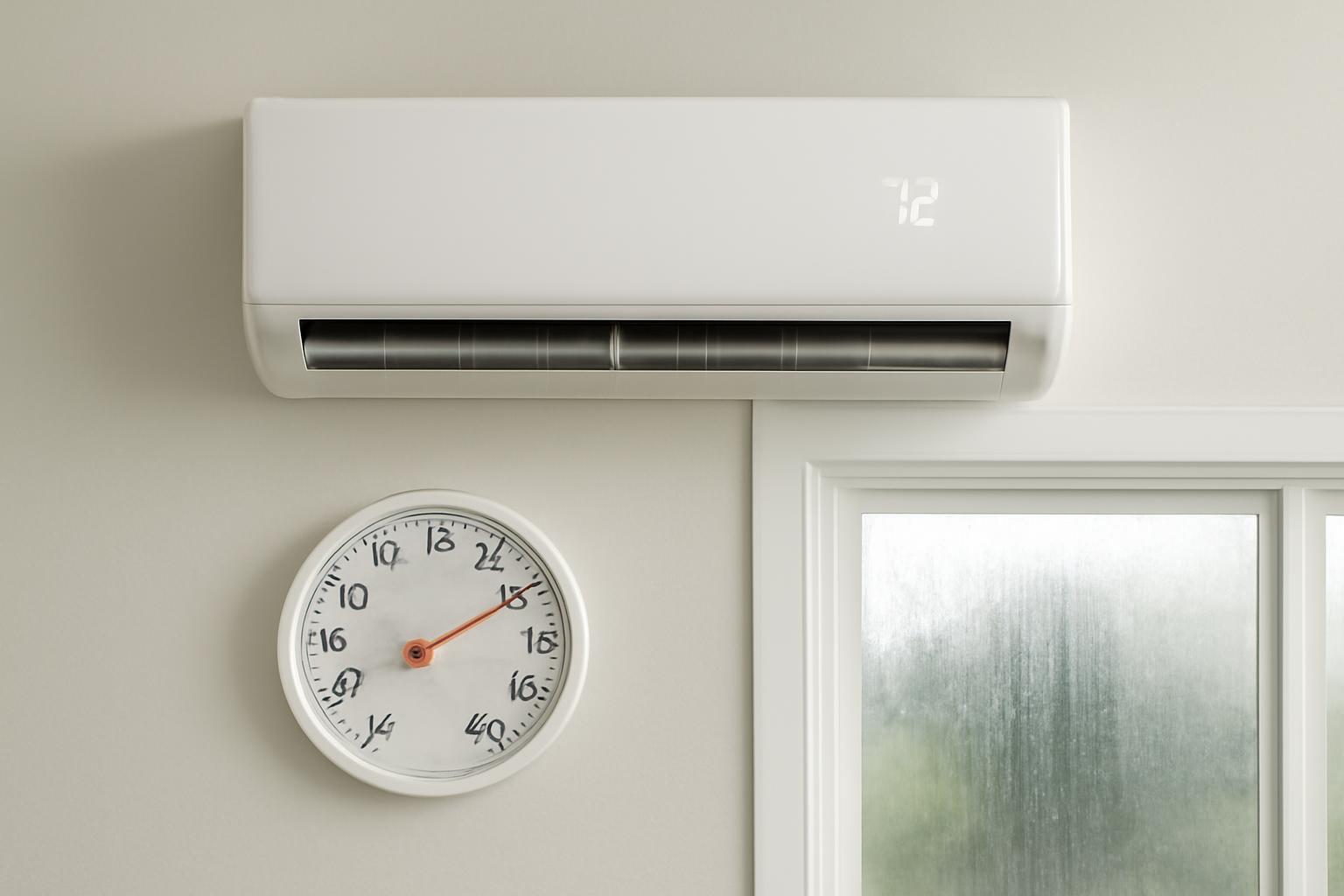
The clearest signs an air conditioner is oversized are short cycling, weak humidity control, and rooms that feel cool for a moment but never truly comfortable. A system that is too large can hit the thermostat setpoint quickly, then shut off before it has run long enough to pull moisture from the air. That is why a house can feel cold and still feel sticky.
This is not a small comfort issue. Oversizing often creates the exact complaints homeowners describe as “the AC works, but the house still feels off.” If your filter seems to clog faster than expected while the cooling runs are brief and uneven, the problem may not be the filter at all. Start with how often to replace an HVAC filter so you can rule out a simple airflow restriction before you blame the equipment size.
What oversizing looks like in a house
An oversized air conditioner usually does three things at once:
- it drops temperature quickly,
- it shuts off before the house has had time to dry out,
- and it repeats that cycle over and over.
The result is a room that feels abruptly cold near a supply vent, but still feels damp or uneven in the rest of the house. The thermostat may look satisfied, yet people in the house keep adjusting fans, closing vents, or lowering the setpoint just to feel normal. That is a clue that the system is satisfying the sensor faster than it is satisfying the room.
Short cycling is especially common on milder days. When the weather is not extreme, an oversized system can hit setpoint in a very short burst and then disappear. A properly matched system usually stays on long enough to create steadier temperature and better dehumidification.
Common signs you can notice without tools
You do not need a gauge set or load calculation to spot the pattern. Watch for these everyday clues:
- the AC starts and stops a lot during the hottest part of the day,
- some rooms feel cold while others stay muggy,
- the house feels better in the first few minutes of a cycle than at the end of the hour,
- the thermostat is happy but the people in the room are not,
- and the system seems louder at startup than it does in actual operation.
Another common clue is that the house feels better on a day when the system runs longer. That sounds backwards, but it makes sense: longer runtime gives the coil time to pull moisture out of the air. If the unit is too large, the short run time works against comfort.
Why the thermostat can be misleading
A thermostat only reports temperature at one point in the house. It cannot tell you whether the rest of the rooms are drying out, whether the system is cycling too often, or whether the supply air is blasting a room into a quick cool-down and then leaving it sticky. That is why the “it hits setpoint” argument is not enough.
If the home feels uneven, check whether the problem appears across multiple rooms or only in one spot. A single bad room can point to duct layout, solar gain, or return placement. Multiple rooms feeling cool-but-damp is more consistent with a sizing problem. That distinction matters because you do not want to replace a usable thermostat or chase a vent problem when the actual issue is a system that is too large for the load.
Why bigger is not better
People often assume a larger AC must be more powerful and therefore better. In practice, an oversized system can be worse because it solves the temperature number too quickly and ignores the moisture problem. Cooling is not just about how low the thermostat can go. It is about how evenly the house feels while the system is running and after it stops.
An oversized unit can also make the rest of the system look bad. Ducts, returns, and filters get blamed because the symptoms are messy, but the root cause is often the equipment choice. The system may be blowing hard enough to feel impressive, yet still be failing to create steady comfort.
That is also why humid climates expose oversizing so quickly. If moisture removal matters a lot in your area, a fast, flashy cycle is not the goal. A longer, steadier cycle usually feels better, especially when combined with decent fan control and sensible thermostat settings. For that side of the comparison, heat pump vs central air for humid climates is the better next read.
What a contractor should be able to explain
If you are getting quotes or a second opinion, ask for the logic behind the size, not just the tonnage. A solid explanation usually includes:
- the load calculation or equivalent reasoning,
- how long the system is expected to run on a normal summer day,
- what it will do for humidity control,
- and why the chosen size fits your home’s actual load instead of a generic rule of thumb.
If the answer is mostly “bigger gives you more cooling,” keep asking. More capacity is not the same as better comfort. You want enough capacity to cover the home on a hot day, but not so much that the system satisfies the thermostat before it has done its real job.
What a good fix usually looks like
Sometimes the answer is not a full replacement. A contractor may be able to improve the setup with better airflow, control adjustments, or a smaller staging strategy on the next replacement cycle. What matters is that the fix should address runtime and humidity, not just raw cold-air output.
If the equipment is already in place, the immediate goal is to measure the pattern honestly: how long it runs, how quickly it restarts, and whether the house stays comfortable after the cycle ends. That information gives you a better discussion than a vague complaint that the AC seems too strong.
Questions that help separate sizing from other problems
Short cycling does not always mean oversizing. It can also come from thermostat placement, airflow issues, a faulty control board, or refrigerant-side problems. The job is to isolate the pattern instead of guessing.
Use these questions:
- Does the system short cycle on mild days or only on extreme days?
- Do the same rooms feel wrong even after the filter is changed?
- Does humidity stay high after the temperature drops?
- Has the equipment always behaved this way, or did the pattern change after a replacement?
If the system has behaved poorly from day one, oversizing is a strong suspect. If the problem appeared after a repair, the issue may be control-related rather than equipment size.
What to do next
The next step is not to start changing vents at random. It is to document the pattern, note cycle length, and compare that with the filter condition and the thermostat behavior. If the cooling runs are very short and the house still feels damp, the likely fix is not more thermostat lowering. It is a better match between the system and the load.