
Heating
Your Mini Split Says DF: What Is Normal and When to Act
It usually means a temporary defrost cycle, not proof of a fault. Leave the mini split running; investigate a persistent display with no heating recovery.
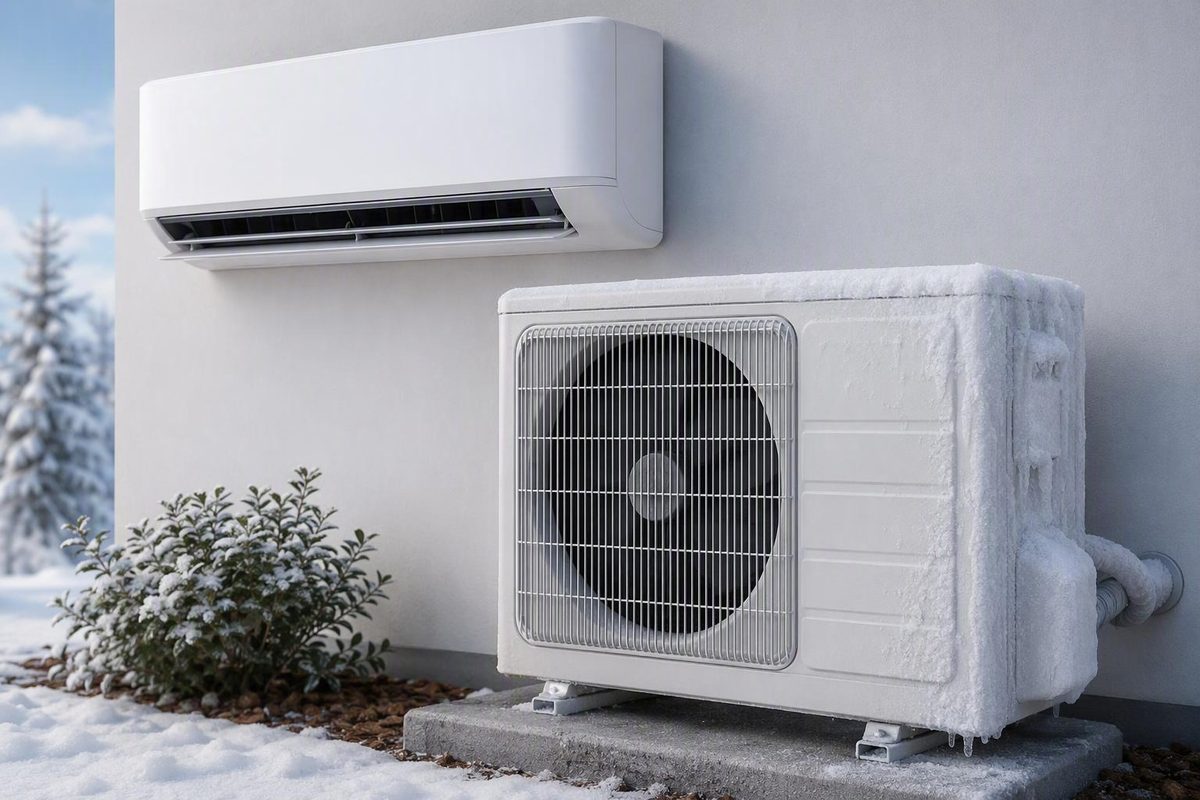
The short answer: DF usually means defrost mode
DF or dF usually stands for defrost or defrost mode. It most commonly appears while a heat-pump mini split is heating and automatically removing frost from its outdoor coil. By itself, DF is generally a temporary operating status—not proof that the equipment is malfunctioning.
During defrost, warm-air delivery may pause, fan operation may change, and water or visible vapor may appear outdoors. Once the cycle is complete, the display should clear and the mini split should return to heating automatically.
The important qualification is that display meanings and control behavior can differ by brand, model, and product series. Your equipment’s exact manual or manufacturer support page takes priority over a generic code list. Confirm that the display is actually “DF,” particularly if the system is not in heating mode or another code appears.
Use this rule of thumb:
- DF appears temporarily, clears, and useful heating returns: Usually normal defrost operation.
- DF does not clear within the model’s guidance, heating never returns, heavy ice remains, or another code appears: Investigate further through the manufacturer, installer, or a qualified HVAC professional.
Do not treat DF as a diagnosis. Its appearance alone does not prove that the mini split has low refrigerant, a defective sensor, a failed fan, or another faulty component.
Why a mini split has to defrost while heating
A heat pump heats a building by collecting heat outdoors and transferring it indoors. During that process, the outdoor coil can operate at a temperature below the surrounding outdoor air.
When airborne moisture contacts the cold coil, it can condense and freeze. Cold, humid conditions are especially favorable for frost formation. Snow, rain, and cold wind can also affect how quickly frost accumulates; MRCOOL identifies humidity, precipitation coverage, and cold winds as environmental influences on defrost frequency in its DF troubleshooting guidance.
A light layer of frost does not necessarily indicate a defect. The concern is continued accumulation. Frost can restrict airflow through the outdoor coil and interfere with heat exchange, so the system must periodically remove it.
During automatic defrost, the mini split temporarily redirects its heat-moving process. Many systems reverse refrigerant flow so that heat reaches the outdoor coil. The frost melts, water drains away, and the system can resume extracting outdoor heat more effectively.
That is also why indoor heating pauses. The refrigerant circuit is temporarily warming the outdoor coil instead of the rooms. Depending on the model, the indoor fan may stop or the unit may briefly deliver air that feels cooler than normal.
The system’s sensors and controls determine when defrost starts and stops. There is no universal activation temperature, sensor threshold, or fixed schedule for every mini split. Two models can behave differently in similar weather without either one necessarily being defective.
What normal defrost looks and sounds like
A typical sequence may look like this:
- Before DF: The mini split is heating, and frost develops on the outdoor coil.
- During DF: The display shows DF or dF. Warm indoor airflow pauses or decreases while the system melts the frost.
- After DF: The display clears, normal fan operation returns, and useful heating resumes automatically.
Not every mini split will show every sign. Fan logic, display behavior, and sound levels vary among models. During an ordinary cycle, however, you may notice:
- Little or no warm air from the indoor unit
- Briefly cooler indoor airflow
- Temporary outdoor-fan stoppage
- Different humming or refrigerant-flow sounds outdoors
- White vapor rising from the outdoor unit
- Water dripping from the outdoor unit’s base
Visible vapor during defrost is commonly steam or water vapor produced as frost melts around the warming coil. In the context of a temporary DF event, it is not automatically evidence that the equipment is smoking. Dripping water can likewise be ordinary defrost meltwater rather than a refrigerant leak.
Airspool’s description of normal mini-split defrost behavior includes temporarily reversed operation, paused or cooler indoor airflow, steam, and draining water.
The most useful sign of a normal event is not a particular sound or amount of vapor. It is that the cycle finishes and useful heating returns without intervention.
For example, DF on a cold, damp morning may be routine if indoor heat pauses, vapor appears outdoors, and the unit resumes heating. The same display deserves attention if the room continues cooling because the system never returns to normal operation.
Do not assume that every visible plume is harmless regardless of context. If the vapor is not associated with a temporary defrost event, the system does not resume heating, the unit shuts down, or another code appears, contact the manufacturer or a qualified professional.
How long DF lasts—and why there is no universal timer
There is no single normal duration or recurrence interval for every mini split. Defrost timing can vary with:
- Brand, model, and control strategy
- Outdoor temperature
- Outdoor humidity
- Rain or snow exposure
- Wind exposure
- The amount of frost on the coil
- Heating runtime and demand
- Outdoor airflow and drainage conditions
Manufacturer-specific numbers are useful only when applied to the equipment they describe. Senville says defrost on its systems typically lasts 5–15 minutes, depending on outdoor temperature and humidity, and recommends contacting Senville support if DF remains displayed for more than 30 minutes. Both figures are specific to Senville systems rather than universal thresholds for every mini split. Senville provides those timing and support guidelines here.
By comparison, Pioneer’s guidance for its listed Diamante and Quantum series confirms that those systems should return to heating automatically after defrost but does not publish a cycle duration. That difference illustrates why the exact model documentation matters.
Do not judge the system solely against a stopwatch or a timing estimate found online. Instead, consider three observations together:
- Did the DF display clear?
- Was the outdoor frost reduced?
- Did normal heating return?
If the pattern seems unusual, record the start and end time rather than repeatedly interrupting the cycle. A short log may show that DF occurs mainly during damp weather, after extended heating, or during wind and snow exposure. It may also reveal that cycles are becoming longer or that heating recovery is weakening.
Useful notes include:
- Date and time
- Outdoor temperature and weather
- Approximate DF start and end
- Whether indoor airflow stopped
- Whether the outdoor fan stopped
- Whether visible frost melted
- Whether useful heating resumed
- How soon DF returned
That record gives manufacturer support or a technician more useful information than simply reporting that the unit “defrosts too much.”
What to do when DF appears
The best first action is usually simple: leave the mini split running and allow its automatic defrost cycle to finish.
Do not assume that a reset will restore heat faster. Senville specifically advises against turning the system off and back on, resetting breakers, or repeatedly switching modes while DF is displayed because doing so interrupts the cycle.
Use this decision path:
-
Wait for defrost to finish. Leave the system in its selected heating mode and watch the display.
-
Confirm whether heating resumes. Allow time for the system to transition back into heating. Check for useful warm airflow rather than relying only on the display.
-
Visually inspect accessible outdoor areas. From a safe position, look for snow, leaves, vegetation, or debris obstructing the outdoor unit. Also check for refrozen water accumulating around its base.
-
Check routine filter maintenance. Inspect and maintain the indoor unit’s filters according to the model manual. A filter needing service is not necessarily the cause of DF, but proper airflow remains important to normal operation. Follow the unit manufacturer’s instructions rather than applying a generic replacement schedule.
-
Consult the exact model documentation. Find the complete model number on the equipment label and use the matching owner’s manual or manufacturer support page. A code list for another series may not apply.
-
Contact support if normal operation does not return. Start with the manufacturer or installer, especially for recently installed equipment. A qualified HVAC professional may be needed if documented user checks do not resolve the problem.
Limit homeowner action to loose, accessible obstructions around the unit. Preserve the manufacturer’s required clearances, and do not improvise a cover that could obstruct intake or discharge airflow. Keep hands, tools, and clothing away from the fan guard and moving equipment; follow model-specific instructions before doing anything beyond an external visual check.
Do not attempt refrigerant or sealed-system work. General service guidance directs users to appropriately qualified technicians for refrigerant and sealed-system diagnosis. AppliancePartsPros also cautions that procedures and fault behavior vary by model.
Before contacting support, collect:
- Brand and complete model number
- Current outdoor temperature and weather
- Approximate length of each DF event
- How often DF returns
- Whether useful heating resumes
- Whether substantial ice remains afterward
- Any other displayed code
- Photos of the outdoor coil and base area, if safely visible
These observations help support distinguish ordinary weather-related defrost from behavior that needs diagnosis.
Normal defrost versus signs of a problem
Return to normal heating is the most useful homeowner-level test. No universal minute limit applies to every brand, but the overall pattern can help you decide whether service is appropriate.
| Normal | Concerning |
|---|---|
| DF appears while the mini split is heating in cold or damp weather. | DF does not clear within the guidance for the exact model. |
| Warm airflow pauses temporarily. | Heating never resumes after the cycle. |
| Indoor or outdoor fan operation changes. | The system appears to remain in defrost nearly continuously. |
| Outdoor sounds change for a short period. | Substantial outdoor-coil ice remains after completed cycles. |
| Steam or water appears outdoors as frost melts. | Another fault code appears. |
| The display clears on its own. | The unit shuts down or stops operating. |
| Useful heating resumes automatically. | Heating recovery becomes consistently weak or DF behavior worsens. |
Frequent DF alone does not prove a component failure. Defrost may recur more often when weather promotes rapid frost formation. The same unit can behave differently during wet, windy conditions than it does on a calm, dry day.
Frequency becomes more concerning when it is paired with another symptom, such as no heating recovery, heavy ice that remains after repeated cycles, near-continuous DF, shutdowns, or another code.
Possible contributors to abnormal behavior include blocked airflow, drainage trouble, refrigerant problems, temperature-sensor issues, control faults, outdoor-fan problems, or installation concerns. These are possibilities requiring diagnosis—not conclusions that can be drawn from the DF display alone. A contractor overview of abnormal mini-split defrost behavior likewise presents these as potential causes rather than a diagnosis for any particular unit.
If concerning symptoms are present, contact the manufacturer, installer, or a qualified HVAC professional. Report what the equipment actually does rather than declaring that DF means the refrigerant is low or a control board has failed.
For recently installed equipment, document the pattern promptly and contact the installer while applicable product-support, labor, or warranty options may still be available. Installation questions should be evaluated against the manufacturer’s specifications.
Why DF may appear unusually often
Repeated defrost can result from environmental or accessible conditions, but it can also reflect a problem requiring professional diagnosis. Separating those categories helps prevent both unnecessary alarm and unsupported troubleshooting.
Environmental conditions
Frost may accumulate faster during:
- Cold outdoor temperatures
- High humidity
- Snow or rain exposure
- Cold wind across the outdoor unit
- Extended or heavy heating operation
Several factors can occur at the same time. A system may run for long periods because the building is losing heat quickly while damp, windy weather also encourages outdoor-coil frost. That combination does not automatically mean the defrost controls are defective.
Building conditions also affect comfort during DF.
Conditions you can observe safely
Without removing panels or reaching into the unit, look for:
- Snow piled around the outdoor unit
- Leaves, vegetation, or debris restricting airflow
- Refrozen meltwater accumulating around the base
- A visible drainage area blocked by snow or debris
- A filter needing maintenance under the model’s instructions
- Evidence that the building is losing heat rapidly
- Heavy frost that remains after DF clears
Blocked outdoor airflow can interfere with heat exchange and contribute to icing. Poor drainage can allow defrost water to refreeze around the outdoor unit.
Remove only loose obstructions that can be reached without contacting equipment components. If the condition cannot be addressed through an external, accessible check, request guidance from the manufacturer or installer.
Possible faults that require diagnosis
When defrost is prolonged, nearly continuous, or ineffective, possible explanations can include:
- Refrigerant loss or an incorrect charge
- A temperature sensor that is faulty or reading incorrectly
- An outdoor-fan problem
- A control or circuit-board fault
- A reversing or refrigerant-flow problem
- An installation issue
- Drainage conditions that promote refreezing
This list is not a diagnosis. Different faults can produce similar visible behavior, and severe-weather operation can look excessive to someone unfamiliar with the system. DF alone cannot identify which explanation—if any—applies.
Refrigerant, sealed-system, and internal control work should be handled by an appropriately qualified technician.
Give the technician an observation log containing:
- Outdoor temperature, humidity, wind, and precipitation, if known
- DF duration and recurrence
- Photos of ice remaining after a cycle
- Other displayed codes
- Indoor airflow behavior
- Whether useful heating returns
- Whether the issue began after installation, service, or a weather change
Do not use repeated breaker resets as a cure for recurring DF. They can interrupt a necessary defrost cycle without addressing the reason the behavior keeps returning.
Manage defrost water without blocking the outdoor unit
Water draining from the outdoor unit during defrost is expected because accumulated frost is melting. The amount can vary with the frost buildup and current weather.
That water still needs a suitable place to go. In freezing conditions, it can refreeze beneath the unit or spread onto a nearby path, creating drainage and slip concerns.
From an accessible position, check that:
- Snow is not packed around the base.
- Leaves and debris are not blocking visible drainage areas.
- Refrozen water is not accumulating around the unit.
- Meltwater is not spreading across a commonly used walkway.
- Air can move freely around the outdoor unit.
- Manufacturer-required clearances remain open.
Be cautious about improvised solutions. Routed water can freeze inside a drain tube, and any pan, heat cable, cover, roof, wind shield, or snow shield must be suitable for the specific equipment and installation. A poorly placed addition can interfere with airflow or drainage.
Before modifying the drainage arrangement or adding weather protection, consult the installation manual or installer.
Frequently asked questions
Is DF an error code on a mini split?
Usually not. DF or dF commonly identifies automatic defrost mode during heating. It is generally a status indication rather than evidence of a malfunction by itself.
Code meanings are not guaranteed to be identical across every brand and model, however. Confirm the display in the exact manual. A temporary DF indication followed by normal heating is usually expected; a persistent display with no heating recovery deserves further investigation.
Should I turn off or reset my mini split while DF is displayed?
Usually, no. Leave the mini split running so it can complete automatic defrost. Do not repeatedly switch modes, cycle power, or reset the breaker simply because DF appears.
If the exact model manual gives a different procedure, follow it. If DF does not clear and heating does not resume, contact manufacturer support or a qualified professional instead of repeatedly interrupting the system.
Why is my mini split blowing cool air or not blowing during defrost?
During defrost, the mini split temporarily directs heat toward the outdoor coil to melt frost. It is therefore not delivering normal indoor heat at that moment.
Depending on the model, the indoor fan may stop or the system may briefly move cooler air. This is generally normal if it lasts only for the defrost event and warm airflow returns afterward.
When should I call for service about repeated or prolonged DF cycles?
Request support when:
- DF exceeds the duration specified in the exact model’s guidance.
- Heating never resumes.
- The system appears to remain in defrost nearly continuously.
- Heavy ice remains after repeated cycles.
- Another fault code appears.
- The unit shuts down.
- Heating performance continues to deteriorate.
Manufacturer-specific thresholds should not be applied automatically to other brands. Use the manual for your equipment and describe the complete operating pattern when requesting help.
Is steam or water coming from the outdoor mini-split unit during DF normal?
Yes, it can be. Defrost warms the outdoor coil and melts accumulated frost, which can produce visible water vapor and dripping meltwater. Outdoor-fan behavior and operating sounds may also change temporarily.
Context matters: the vapor or water should occur during a temporary defrost event, the cycle should complete, and heating should resume. Keep visible drainage areas clear and watch for meltwater refreezing beneath the unit or on a walkway.
Conclusion
DF usually reflects a necessary automatic defrost cycle, not equipment failure. Leave the mini split running, watch for useful heating to return, and inspect only accessible airflow and drainage areas. Compare the behavior with the exact model manual, and contact the manufacturer, installer, or a qualified technician if DF persists, substantial ice remains, another code appears, the unit stops, or normal heating does not return.