
Heating
Emergency Heat Is a Backup Mode, Not an Extra-Cold-Weather Setting
In the usual setup, Aux Heat assists the heat pump, while EM Heat stops the outdoor heat pump and relies on the secondary source instead.
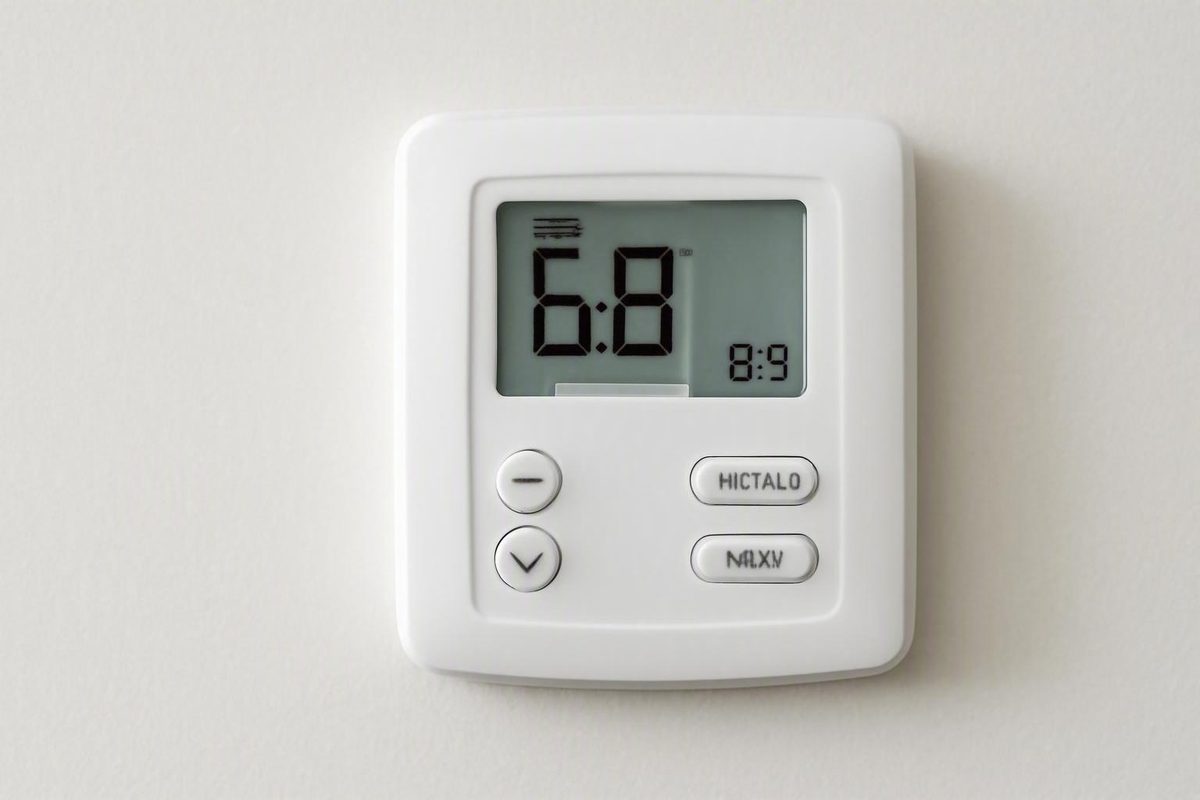
The short answer: what EM Heat means
EM Heat means Emergency Heat. It is a backup-heating mode found mainly on thermostats connected to compatible heat-pump systems.
When you select EM Heat, the system typically stops or bypasses normal outdoor heat-pump operation and uses the installed backup source instead. That backup may be:
- Electric resistance strips in the indoor air handler
- A gas furnace in a dual-fuel system
- An oil furnace
- Another system-specific secondary heater
In other words, EM Heat changes which heating equipment operates. It does not simply tell the heat pump to work harder. In the usual arrangement, auxiliary heat assists the heat pump, while Emergency Heat stops the outdoor heat pump and relies on the secondary source (Lennox’s emergency-heat explanation).
EM Heat is not an extra-powerful version of normal Heat, and it is not a shortcut for warming the house faster. Its purpose is to provide temporary heat when the primary heat pump is unavailable, damaged, or otherwise unable to heat the home.
The practical rule is simple:
- Use normal Heat for everyday heating.
- Allow the system to call for Aux Heat automatically when needed.
- Reserve EM Heat for a heat-pump problem or an equipment-specific instruction.
The words “typically” and “generally” matter. Thermostat labels, backup sources, and control sequences vary. The documentation for your thermostat and heat pump should take priority over a generic definition.
How to tell whether the setting applies to your system
Emergency heat is primarily a heat-pump feature. Conventional furnaces, boilers, electric baseboard heaters, and other systems generally do not need a thermostat mode that bypasses an outdoor heat pump because they do not use one as their primary heating source.
A heat pump can provide both cooling and heating. During cooling, it transfers heat out of the house. During normal heating, it reverses that process and transfers available heat from outdoors into the house. The outdoor unit may therefore run during winter even though it resembles a central air-conditioning condenser.
Seeing an Emergency or EM Heat option is a strong clue that the thermostat may control a heat pump with a backup source. It is not conclusive by itself.
Useful ways to identify your system include:
- Read the thermostat mode labels. Look for Heat, Cool, Auto, Aux, Emergency, or EM Heat.
- Find the equipment model information. The outdoor unit’s manual or manufacturer documentation should identify whether it is a heat pump.
- Check the thermostat manual. Confirm what the displayed labels mean for that model.
- Identify the backup heater. Review installation records, equipment documentation, or previous service invoices for references to heat strips, an air handler, a gas furnace, oil heat, or dual fuel.
- Ask the installer or an HVAC professional. This is preferable to experimenting with thermostat wiring.
On supported Nest installations, an Emergency switch or button, manufacturer confirmation, or compatible emergency-heat wiring documented for the system may indicate support. Not every heat-pump system includes the feature (Google Nest’s emergency-heat documentation).
If your thermostat does not show EM Heat, possible explanations include:
- The heating system is not a heat pump.
- The heat pump lacks a separately controlled emergency source.
- The thermostat does not support the feature.
- Emergency heat has not been enabled in the thermostat configuration.
- The wiring or control design handles backup heat differently.
- A dual-fuel or proprietary control system uses another label or operating sequence.
A missing option does not, by itself, indicate a failure. Check the applicable manuals rather than removing the thermostat or changing terminals. Thermostat wiring is equipment-specific, and manufacturer setup instructions should be followed for the installed model.
It is also useful to identify the backup source before using EM Heat for an extended period. Electric resistance strips and fuel-fired furnaces do not have identical operating costs. Knowing what “backup” means in your home makes both troubleshooting and cost estimates more useful.
Heat vs. Aux Heat vs. EM Heat
The three labels describe related but different operating states:
| Mode | Which heat source operates? | How is it activated, and what is its purpose? |
|---|---|---|
| Heat | Primarily the heat pump; automatic backup may assist when controls call for it | Selected for routine heating. The heat pump transfers outdoor heat into the home. |
| Aux Heat | The heat pump generally continues operating while the backup heater assists | Usually activated automatically when the controls determine that additional heat is needed. |
| EM Heat | The backup source generally operates alone while normal heat-pump operation is stopped or bypassed | Usually selected manually when the heat pump has failed, is damaged, or should not operate. |
Normal Heat
Normal Heat is the everyday setting. The thermostat calls for heating, and the heat pump moves heat indoors. If the system is properly configured, its controls can decide when to add the secondary source without the homeowner changing modes.
Normal Heat does not necessarily mean the heat pump is the only source running every second. Depending on the system, automatic auxiliary heat may become part of normal operation.
Aux Heat
Auxiliary heat is supplemental heat. It generally turns on automatically while the heat pump remains available but needs assistance.
An AUX indicator may appear when:
- Colder conditions increase the heating load.
- The system is recovering after a large setpoint increase.
- The heat pump enters a defrost cycle.
- The controls determine that the heat pump alone is not raising the indoor temperature adequately.
Extreme cold, a substantial setpoint increase, and defrost are among the conditions in which thermostat controls may call for auxiliary heat automatically (Craighead Electric Cooperative’s guide).
Seeing AUX briefly does not, by itself, mean the heat pump is broken. It may simply show that the system is using its designed second heating stage. Frequent or prolonged auxiliary operation in mild weather can justify investigation, but the display alone does not identify a cause.
EM Heat
EM Heat generally removes the heat pump from the heating sequence and relies on the backup source. It is commonly selected manually rather than called automatically as routine assistance.
The key distinction is:
- Aux Heat assists the primary heat pump.
- EM Heat generally replaces the primary heat pump temporarily.
The terms should not be treated as interchangeable, even though some thermostat interfaces and informal explanations use them loosely. Labels and control logic vary, so consult the equipment documentation before assuming exactly what will run.
When should you turn on emergency heat?
Cold weather alone is not a universal reason to select EM Heat.
A properly configured heat-pump system generally decides when it needs auxiliary assistance. Manually switching to Emergency Heat can take an operating heat pump out of service and leave the backup source carrying the entire heating load.
The relevant question is not, “Has the outdoor temperature crossed a particular number?” It is, “Can the primary heat pump operate normally, and what do the equipment instructions say?”
Appropriate temporary uses may include:
- The heat pump has stopped producing heat.
- The outdoor unit has been physically damaged.
- Persistent severe icing prevents the unit from operating or defrosting normally.
- An HVAC technician or the equipment manufacturer directs you to use the mode.
- The primary heat pump must remain off while diagnosis or repair is arranged.
Guidance for heat-pump owners generally recommends leaving the thermostat on normal Heat during cold weather because the controls can engage auxiliary heat automatically. Emergency mode is reserved for situations in which the heat pump is no longer heating the home (Coolray’s comparison of auxiliary and emergency heat).
Use this compact decision guide:
- The heat pump is operating and the house is heating: Leave the thermostat on normal Heat.
- AUX appears automatically: Observe the system. Do not select EM Heat merely because AUX is displayed.
- The house is recovering after a large setpoint change: Give the normal controls an opportunity to manage the heating stages.
- The heat pump cannot operate or has obvious damage: Consider EM Heat temporarily, if the system supports it, and arrange service.
- You are unsure whether the outdoor unit’s behavior is normal: Check the manual and document what is happening before changing modes.
Emergency heat does not necessarily warm the house faster. Its capacity depends on the installed backup heater, airflow, building heat loss, and operating conditions. More importantly, EM Heat is a routing command—not a “boost” button.
Avoid universal cutoff rules based on outdoor temperature. Heat-pump capacity, climate suitability, backup design, thermostat programming, and manufacturer controls vary. A temperature rule from another house or equipment model may not apply to yours.
Frost, defrost, and a genuinely iced-over heat pump
Some frost can occur on an outdoor heat-pump coil during heating operation. Heat pumps use a defrost cycle to clear the coil by temporarily changing their operation. Depending on the installation, auxiliary heat may turn on automatically during defrost to help maintain indoor comfort.
Ordinary frost or a routine defrost cycle generally does not require the homeowner to select EM Heat. The normal controls are designed to manage that process.
Conditions that deserve closer attention include:
- Heavy ice that persists or continues building
- A coil or cabinet encased in ice
- A fan obstructed by ice
- An outdoor unit that remains inactive while heat is requested
- Visible impact or storm damage
- Grinding, banging, or other abnormal sounds
- A home that is losing temperature or no longer heating
- Repeated unsuccessful attempts to run or defrost
Emergency heat may be appropriate temporarily when a frozen or damaged heat pump cannot operate, but it is not a substitute for determining why the condition persists (Valley Service’s overview of emergency-heat use).
Take photographs, note the weather, and record whether the outdoor fan or compressor appears to operate. Check the equipment manual and arrange professional evaluation if ice persists or the unit cannot return to normal operation.
The meaningful signs are whether the ice clears, whether the outdoor unit can operate, and whether the home continues to heat.
Why EM Heat can increase heating costs
A heat pump and an electric resistance heater produce warmth in different ways. The heat pump uses electricity to transfer existing heat from outdoors into the home. Electric resistance strips use electricity to generate heat directly. If EM Heat disables an available heat pump, those strips may have to carry the heating load alone instead of briefly assisting the primary source.
Prolonged emergency operation can therefore cost more than normal heat-pump heating, particularly when the backup consists of electric resistance elements. The longer that backup operates by itself, the greater the opportunity for increased electricity use (Craighead Electric Cooperative’s explanation of resistance backup).
Selecting EM Heat can also change the operating sequence. In normal Heat, the heat pump may do most of the work and call for auxiliary heat only when necessary. In Emergency Heat, the thermostat may stop using the outdoor unit and leave the secondary heater responsible for maintaining the setpoint.
There is no credible universal multiplier for the resulting bill. Actual cost depends on:
- Whether the backup uses electricity, gas, oil, or another energy source
- The backup heater’s capacity
- How many hours it runs
- Outdoor conditions
- The home’s insulation and air leakage
- Thermostat setpoint and setback strategy
- Duct and airflow conditions
- Local electricity and fuel prices
- Whether the backup source is operating properly
Gas, oil, and electric backup systems should not be treated as though they have identical economics. A dual-fuel system may switch between a heat pump and a furnace according to controls designed for that installation. Claims that emergency heat is always more expensive are too broad, although electric resistance backup is a common reason for increased consumption.
If you activate EM Heat accidentally for a short period, that alone is not evidence that you damaged the system. The more immediate concern is unnecessary backup-heater operation and its possible cost (Mode Comfort’s emergency-heat guide).
EM Heat should not be used as a cost-saving or fast-recovery strategy. If the primary heat pump is healthy, normal Heat allows the system to use its intended operating sequence.
What to do if EM Heat appears unexpectedly
Start by reading the thermostat carefully. Confirm whether it is actually set to Emergency Heat or merely displaying an auxiliary-heat status.
Depending on the interface, you might see:
- EM Heat as the selected operating mode
- Emergency Heat as an active status
- AUX or Aux Heat
- Stage 2 or Backup Heat
- An alert related to the heat pump
- A symbol defined only in the thermostat manual
Those messages are not necessarily equivalent.
If Emergency Heat was selected accidentally, return the thermostat to normal Heat mode. The exact process varies by model and may involve a physical switch, mode button, on-screen menu, or app. Avoid entering installation or wiring menus when you only need to change the operating mode.
After switching back to normal Heat:
- Confirm the heating setpoint. Make sure it is above the current indoor temperature if you expect a heating call.
- Check thermostat batteries, if applicable. Follow the thermostat manual for battery replacement.
- Record alerts or error codes. Photograph the display before dismissing a message.
-
Check the HVAC filter. Look for obvious loading or an installation problem, and note whether register airflow has changed.
-
Visually inspect the outdoor unit. Look for obvious obstruction, impact damage, inactivity, or persistent heavy ice without opening the equipment.
- Listen from a safe distance. Note repeated starts, grinding, or other abnormal sounds.
Manufacturer troubleshooting guidance supports confirming thermostat mode, checking batteries and breakers, inspecting the outdoor unit for obstruction or icing, and recording warning lights or error codes. It also advises against repeatedly switching the system on and off when the problem remains unresolved (Lennox’s homeowner troubleshooting guidance).
Do not repeatedly cycle the system or keep resetting a breaker that trips. Do not make thermostat-wiring, sealed-equipment, or refrigerant-side changes as part of homeowner troubleshooting; HVAC Lens similarly recommends observation and basic checks rather than opening sealed components or changing refrigerant-side settings (HVAC Lens’s homeowner guidance).
An unexpected or persistent display does not prove a specific failure. Possible categories include:
- An accidental mode selection
- A thermostat display or configuration issue
- A low-voltage control or wiring problem
- A heat-pump fault
- Restricted airflow
- An outdoor-coil or defrost problem
- A refrigerant-related issue
- A backup-heater or staging problem
These are possibilities, not diagnoses. Different faults can produce similar thermostat behavior.
Before calling for service, write down:
- When the indicator first appeared
- Whether anyone changed thermostat settings
- Outdoor weather conditions
- Indoor temperature and setpoint
- Whether the home is warming, holding temperature, or cooling down
- Any error messages
- Unusual sounds
- Whether the outdoor unit runs
- Whether ice is temporary or persistent
- Whether a breaker has tripped
That record can make the contractor conversation more focused.
When to keep using backup heat and when to call for service
The answer depends on the backup heater, controls, electrical or fuel supply, airflow, and the reason the primary equipment stopped.
Use equipment-specific guidance whenever available. If the manufacturer or technician has told you to operate in Emergency Heat until a scheduled repair, follow those instructions and monitor whether the home continues to heat. Avoid repeatedly increasing the setpoint in an attempt to speed recovery.
Arrange professional service when:
- The home will not warm or continues losing temperature.
- The heat pump will not run in normal Heat.
- The outdoor unit is damaged.
- Heavy ice persists or repeatedly returns.
- The equipment makes abnormal noises.
- The thermostat or controls are unresponsive.
- A breaker trips or trips again after one check.
- EM Heat remains displayed after normal Heat is selected.
- The system repeatedly returns to backup operation.
A persistent EM Heat display may be associated with a thermostat problem, heat-pump fault, or control-wiring issue, but the display alone cannot identify which category is responsible (Berkeys’ discussion of persistent emergency heat).
Frequent backup operation during mild weather can also justify evaluation, but it does not establish a specific diagnosis. Thermostat configuration, control wiring, airflow, coil condition, refrigerant performance, equipment sizing, and component faults are among the categories a technician may need to examine.
Once the primary heat pump has been repaired and normal operation confirmed, switch Emergency Heat off. Verify that the thermostat is in normal Heat and that the equipment follows its expected sequence.
The appearance of EM Heat does not, by itself, mean the system must be replaced. Repair-versus-replacement decisions require equipment-specific diagnosis, condition assessment, and cost information.
HVAC Lens provides general homeowner information rather than contractor advice. Equipment varies by home, climate, controls, and installation, so equipment-specific wiring, configuration, repair, and other major changes should be confirmed with a licensed professional, consistent with the site’s terms for using its guidance.
Frequently asked questions
Should I turn on EM Heat when it is below freezing?
Not solely because the temperature is below freezing. Leave the thermostat on normal Heat if the heat pump is operating, and allow the controls to call for auxiliary heat as needed.
Consider temporary EM Heat when the primary heat pump cannot operate, is damaged, or has another condition for which the manufacturer or technician directs emergency operation. There is no universal outdoor-temperature cutoff that applies to every system.
Does EM Heat make the house warm faster?
Not necessarily. EM Heat changes the heat source from the heat pump to the installed backup heater; it is not a turbo or rapid-heating setting.
How quickly the house warms depends on the backup heater’s capacity, indoor and outdoor conditions, airflow, building heat loss, and the size of the temperature setback. If the heat pump is functioning, normal Heat is generally the appropriate mode.
Will accidentally turning on emergency heat damage my HVAC system?
A brief accidental activation is not, by itself, evidence that damage occurred. The more likely immediate consequence is unnecessary operation of the backup heater, which may increase energy use (Mode Comfort’s guidance on accidental activation).
Return the thermostat to normal Heat and confirm that the system resumes expected operation. If the controls remain in EM Heat, the outdoor unit does not resume, a breaker trips, or the system makes abnormal sounds, arrange professional evaluation rather than repeatedly resetting it.
Why does my thermostat not show an Emergency Heat option?
Not every thermostat or heating system supports a separately selectable Emergency Heat mode. The option may be absent because you do not have a heat pump, the equipment lacks compatible emergency heat, the thermostat does not support it, or the system uses different configuration, wiring, or terminology.
Check the thermostat and heat-pump manuals rather than altering wires. If the feature should be present but is missing, ask the installer or a qualified HVAC professional to verify compatibility and configuration.
Why is EM Heat still displayed after I switch back to normal Heat?
First confirm that normal Heat was selected and that the thermostat has completed the mode change. Check for an alert, delayed response, depleted batteries, or a model-specific status message.
If EM Heat remains displayed, possible categories include a thermostat or configuration issue, a control-wiring problem, or a heat-pump fault that prevents normal operation from resuming. The display does not identify the exact cause. Record the message and system behavior, avoid repeated resets, and call for service if the indicator persists or the outdoor unit does not return to normal operation.
The operating rule to remember
Use normal Heat for everyday heating, let the system call for Aux Heat automatically, and reserve EM Heat for a primary heat-pump failure or another equipment-specific emergency.
If EM Heat appears unexpectedly, verify the thermostat mode, document what the system is doing, and perform only low-risk checks. Seek professional evaluation when the heat pump is inactive, damaged, persistently iced, unable to heat the home, or unable to return to normal operation.