
Feature
When to Shave for a Spray Tan—and What to Do If You Forgot
By Mara Keene · HVAC Lens editorial · · 14 min read
- Published
- 2026-08-04
- Last revised
- —
- Filed under
- Feature
- Length
- 3,080 words
- Read time
- 14 min
- Review status
- Editorial
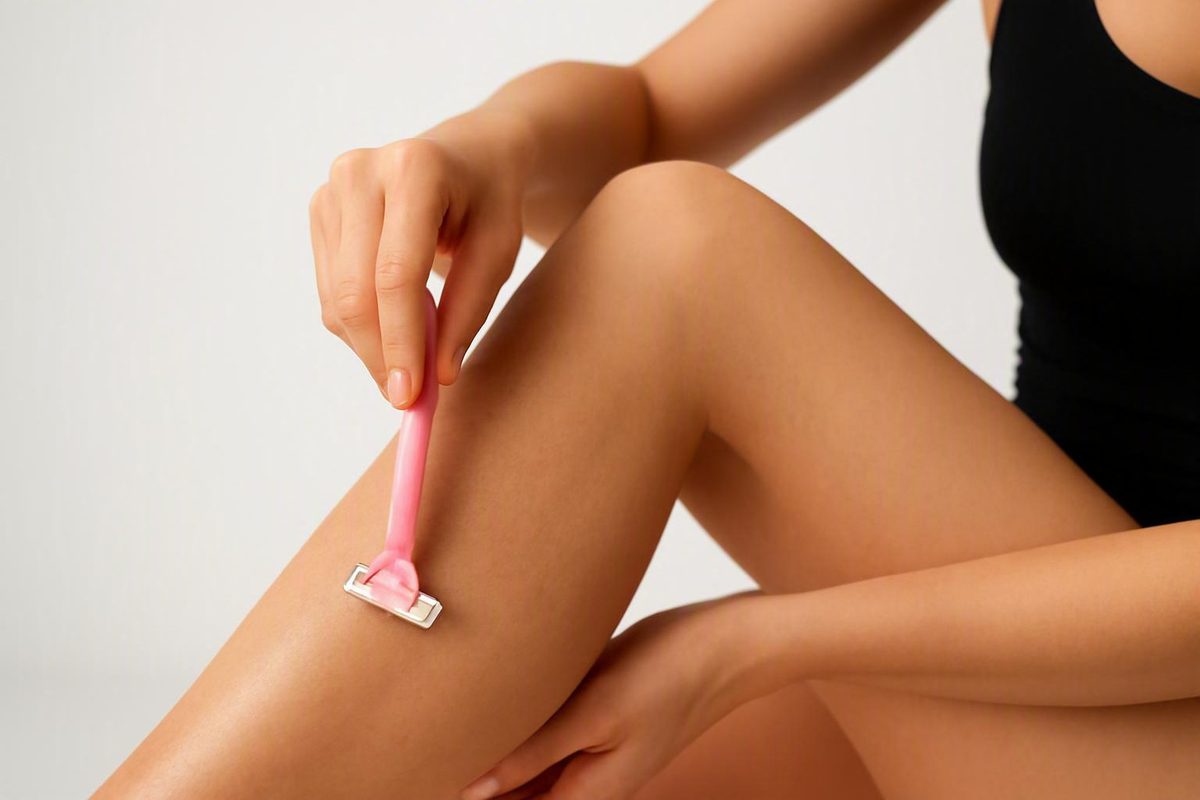
The short answer: shave beforehand if you want to, ideally the night before
If you want to remove body hair, shave before your spray tan rather than soon afterward. A practical default is the night before, giving your skin time to settle before the tanning solution is applied. One first-person preparation guide uses a minimum of about 12 hours, while commercial providers commonly recommend closer to 24 hours (spray-tan preparation timeline).
Some salons accept a shorter interval. For example, goGLOW recommends shaving at least eight hours before the appointment and ideally a full 24 hours ahead (spray-tan shaving guidance).
Shaving is optional. A spray tan can be applied over body hair or stubble, and the supplied evidence does not establish that everyone must shave for the tanning solution to work. Treat hair removal as a grooming preference, not an admission requirement.
Shaving beforehand may also reduce the need to use a razor soon after the tan, when surface exfoliation could make the color fade faster.
These intervals are salon conventions, not clinically established standards. The available recommendations come predominantly from businesses that provide spray tans, and they do not cite controlled studies identifying one ideal shaving window. Your technician’s preparation, development, and rinse instructions should take priority.
For example, if your appointment is tomorrow afternoon, shave tonight rather than immediately before leaving. If your skin commonly stays red or uncomfortable after shaving, allow closer to a full day where practical.
Why shaving time can affect the appearance and life of a spray tan
A razor does more than cut hair. As it passes across the skin, it also removes some material from the surface, making shaving a mild form of mechanical exfoliation.
Immediately afterward, some people may experience:
- Temporary redness
- Dry or tight-feeling skin
- Sensitivity
- Razor burn
- Small nicks or cuts
- Irritation from friction or shaving products
These effects are not inevitable. The point of shaving earlier is to reduce avoidable uncertainty—not to suggest that every same-day shave will spoil a tan.
Commercial tanning providers sometimes associate last-minute shaving with patchiness, streaking, or small dark spots. Those are provider-reported possibilities rather than clinically quantified outcomes. The more defensible explanation is simply that shaving can exfoliate or irritate the surface onto which the cosmetic color will be applied.
Do not schedule your shave around claims that hot water “opens” pores and cold water “closes” them. The supplied material does not establish that pore behavior as a valid explanation for tanning results. Focus instead on factors the preparation guidance consistently addresses: friction, dryness, irritation, cuts, repeated exfoliation, and product residue.
After the spray tan, shaving creates a different concern. Because the cosmetic color is present at the skin’s surface, a razor may remove some colored surface cells along with the hair. Frequent shaving, forceful pressure, or repeated passes can therefore shorten the apparent life of the tan or contribute to uneven fading.
That does not mean you must wait for the entire tan to disappear. It means there is a tradeoff: shaving sooner provides the hair-removal result you want, while waiting longer and shaving less frequently may preserve the color.
For that reason, commercial providers typically recommend scheduling waxing before the spray tan rather than soon afterward.
A practical spray-tan shaving and preparation timeline
Use this as a flexible planning guide, not a universal countdown. Your usual reaction to shaving and the provider’s instructions matter more than hitting an exact hour.
About 24 hours before the appointment
This is the most conservative time to complete any desired shaving. Use a clean, sharp razor, gentle pressure, and no more passes than necessary. Avoid repeatedly exfoliating the same area after shaving. One commercial provider recommends shaving approximately 24 hours before application and arriving with clean, product-free skin on tan day (skin-preparation guidance).
If you also plan to wax or have another intensive hair-removal service, schedule it earlier rather than treating it like an ordinary shave.
About 12 hours before
Shaving the previous evening can still fit the practical range used in salon and lifestyle guidance. It may work well if your skin rarely develops prolonged redness or irritation.
If shaving normally causes razor burn, itching, or visible sensitivity, allow more time instead of treating 12 hours as a target. For a morning appointment, shaving the previous evening is usually more practical than shaving immediately before leaving.
On appointment day
Follow the provider’s directions about showering and permitted products. Common commercial guidance is to arrive with clean, dry skin and without leave-on lotion, body oil, makeup, deodorant, or perfume. Product rules can vary, and some technicians apply their own preparatory or barrier products.
Wear or bring loose, dark clothing for afterward. This is a common salon practice intended to limit rubbing and make incidental color transfer less concerning; it does not guarantee an even result.
Immediately before the appointment
Do not assume you must remove every trace of stubble. If the choice is between attending with body hair and creating fresh redness or razor burn, leaving the hair alone is the more cautious practical option.
Tell the technician if you shaved recently or if an area feels uncomfortable. If you have visible cuts or substantial irritation, contact the provider and ask whether its policy is to proceed or reschedule. The supplied evidence does not establish medical criteria for applying spray-tan solution over an active skin problem.
Immediately after application
Do not shave, shower, swim, or otherwise disturb the tan until you have completed the provider’s required development and initial-rinse process. The relevant waiting period depends on the product and service instructions you receive.
Loose clothing is commonly recommended while the initial color develops. Follow the salon’s specific advice about avoiding garments or activities that may rub the freshly sprayed areas.
After the required initial rinse
Completing the required rinse does not necessarily mean shaving immediately is best for color retention. If preserving the tan is your priority, delay longer. If hair removal is more important, shave only after the required development and rinse process is complete.
Use lukewarm water, gentle pressure, and as few passes as practical. Avoid combining the shave with aggressive scrubbing.
What to do if your spray-tan appointment is today
The decision depends on how much time remains, how your skin normally reacts to shaving, and whether irritation is already present.
If eight hours or more remain
If your skin usually tolerates shaving without prolonged redness, shaving now can be a reasonable fallback. It is less conservative than shaving the night before, but it gives the skin more time to settle than shaving immediately before the appointment.
Shave as early as possible. Use a clean, sharp razor, light pressure, and minimal passes. Do not add an aggressive exfoliation session merely because you missed the preferred preparation window.
Unless the salon says otherwise, rinse away shaving-product residue and avoid applying leave-on oils or heavy lotions afterward.
If only four to eight hours remain
Commercial recommendations conflict in this range. Be Bronze Studio identifies four hours as its latest suggested cutoff, while other providers prefer at least eight hours or discourage same-day shaving (before-and-after shaving recommendations).
Use your normal shaving response as a practical tie-breaker. If your skin generally remains calm after a gentle shave, you may choose to proceed. If shaving usually causes lasting redness, razor bumps, itching, or cuts, attend with stubble instead.
Because these cutoffs are provider conventions rather than established medical thresholds, calling your technician is appropriate when you are unsure.
If only a couple of hours remain
Skipping the shave is generally the more cautious option. One commercial tanning provider specifically advises against shaving two hours before a session because freshly shaved skin may be irritated (shaving and waxing guide).
Forgetting to shave does not automatically require cancellation. A spray tan can be applied over body hair or stubble.
If you already have razor burn, cuts, or substantial irritation
Contact the provider before the appointment, describe what you can see and feel, and ask whether its policy is to continue or reschedule. Do not rely on generic online timing advice to determine whether an active rash, possible infection, skin condition, or significant reaction is suitable for a cosmetic tanning service.
This is a request for provider-specific guidance, not a diagnosis. The supplied commercial sources do not establish medical thresholds for proceeding.
How to shave before the appointment without over-preparing the skin
Effective preparation is mostly about restraint. The objective is clean skin without unnecessary friction or residue—not skin that has been scrubbed and shaved repeatedly.
A practical salon-based routine is:
- Use a clean, sharp razor. This helps you shave without repeatedly working over the same area.
- Apply gentle pressure. Take particular care around areas where you commonly nick yourself.
- Limit repeated passes. A perfectly close shave is not necessary for receiving a spray tan.
- Rinse away shaving-product residue.
- Dry without vigorous rubbing.
- Give the skin time to settle. Do not follow the shave with another aggressive exfoliation session.
Shaving already provides some surface exfoliation.
Gentle exfoliation before a spray tan is common commercial guidance, but recommended timing varies. Tan Your Hide, for example, recommends exfoliating about 24 hours before the appointment and arriving without heavy oils, lotion, deodorant, perfume, or makeup (spray-tan preparation guide).
If you exfoliate and shave in the same shower, exfoliating gently first and then shaving is a reasonable sequence because it avoids scrubbing immediately after the razor passes. This is a practical routine, not a scientifically established requirement.
Do not try to compensate for missed preparation with a harsh last-minute scrub.
Advice about moisturizing after the pre-tan shave is inconsistent. Some providers discourage lotion after shaving, while others allow moisturizing the day before if the residue is removed before application. Resolve that disagreement by asking your salon:
- May I moisturize after shaving?
- Do I need to shower again before the appointment?
- Which products must be absent at application time?
- Will the technician apply a barrier or preparatory product?
If you moisturize because shaving leaves your skin uncomfortable, make sure any product the provider prohibits is removed before the session. There is no evidence in the supplied material that you need a particular branded shaving cream, exfoliant, moisturizer, primer, or tan extender.
On appointment day, the recurring commercial advice is to arrive with clean, dry skin and avoid leave-on lotion, body oil, makeup, deodorant, or perfume unless the provider gives different instructions. Do not apply an unfamiliar product immediately before the session in an attempt to improve the result.
You do not have to shave your whole body—or shave at all
“Should I shave before a spray tan?” is not the same question as “Must I shave?” The answer to the second question is no.
Hair removal is a personal grooming choice. The supplied evidence does not establish that everyone must shave or that body hair inevitably produces patchiness. Commercial salons may say that shaving selected areas creates a smoother-looking finish, but that is different from proving that a spray tan cannot be applied over hair.
You may choose to shave:
- Your legs but not your arms
- Your underarms but not your torso
- Only areas visible in a particular outfit
- Only areas you routinely shave
- No areas at all
One commercial salon guide says shaving is not mandatory and recommends addressing only the areas where a smoother appearance is desired, such as the legs or underarms. It also suggests completing any desired shaving about a day before the appointment (guide to shaving before a spray tan).
Stubble is not an automatic reason to cancel. The perceived finish may differ from freshly shaved skin, but the supplied material does not show that stubble will necessarily cause an uneven result.
The same principle applies to everyone: remove hair only where you want to, using a method your skin already tolerates. Avoid shaving an unfamiliar area for the first time immediately before a spray tan.
If you are concerned about coverage around dense body hair, ask the technician what appearance to expect and identify the areas most important to you. That conversation is preferable to rushing into unfamiliar grooming that may leave your skin irritated.
Shaving versus waxing before a spray tan
Waxing generally requires more lead time than shaving. The supplied commercial guidance ranges from at least 24 hours to 48 hours, with some salons recommending as long as two to three days.
For example, SunsUp Tanning Centers recommends waxing at least 48 hours before the appointment, compared with its suggested 24-hour shaving window (hair-removal timing guidance).
Another salon recommends waxing two to three days before tanning. These differences show why the range should be treated as provider convention rather than a scientifically established interval.
Waxing removes hair and can remove surface skin, so it may leave temporary redness or sensitivity. It can also remove a visible area of an existing cosmetic tan. The practical rule is therefore to wax before the spray tan, allow more time than you would for routine shaving, and avoid waxing soon after application if you want to preserve the color.
Hair-removal methods are not interchangeable:
- Shaving cuts hair at the skin’s surface and provides mild mechanical exfoliation.
- Waxing pulls out hair and can remove more surface skin.
- Plucking addresses individual hairs rather than a broad area.
- Depilatory creams use a chemical hair-removal process.
- Dermaplaning is a distinct facial procedure.
The supplied evidence does not establish suitable spray-tan timing for depilatory creams or facial dermaplaning. Do not automatically apply leg-shaving guidance to those methods. Ask the spray-tan technician and, where applicable, the professional performing the other treatment.
How long to wait before shaving after a spray tan
There is no well-supported universal waiting period. The supplied commercial recommendations differ substantially, ranging from the minimum development period to several days.
One provider permits shaving after at least four hours, while another recommends waiting at least eight hours. These shorter intervals should not override the product-specific development and rinse instructions given at your appointment.
Other commercial guidance is more conservative, recommending at least 24 hours and ideally 48 hours before shaving again. SunsUp uses that 24-to-48-hour range while acknowledging that frequent shaving may accelerate fading.
At the far end, Glo Tanning recommends waiting seven days if shaving after the tan is unavoidable. That is an unusually conservative provider recommendation, not a universal standard.
The conflicting advice becomes easier to interpret if you separate two decisions:
- When the product’s required development and initial-rinse process is complete
- How much longer to wait to help preserve the color
Follow your technician’s instructions before showering, rinsing, swimming, sweating heavily, or shaving. A generic online schedule should not replace the directions for the service you received.
The second decision depends on your priorities. Even after the required rinse, postponing shaving may help the tan last longer by reducing how soon and how often a razor removes colored surface cells.
When you need to shave:
- Complete the required development and initial-rinse process first.
- Use lukewarm water.
- Use a clean, fresh razor.
- Apply light pressure.
- Make as few passes as practical.
- Avoid scrubbing immediately before or after.
- Shave less frequently if preserving the color is the priority.
Expect a tradeoff rather than a guaranteed problem. Shaving can accelerate fading, particularly when it is frequent or involves repeated passes, but one careful shave will not necessarily create obvious streaks.
Avoid waxing soon after a spray tan if you want to retain the color. Because waxing can remove more of the surface layer, it is more likely than gentle shaving to leave visibly lighter areas.
All exact timing recommendations in this article come primarily from commercial tanning providers rather than cited clinical trials. The most defensible rule is to complete the provider’s required development and rinse process first, wait longer when color retention matters, and follow service-specific instructions over a generic schedule.
Can I shave two hours before a spray tan?
It is better not to. Two hours gives freshly shaved skin little time to settle if you develop redness, dryness, nicks, or razor burn. At least one commercial provider specifically discourages shaving this close to a session.
If your appointment is in two hours, attending with stubble is generally more practical than assuming shaving is mandatory. If you have already shaved and now have visible cuts or substantial irritation, contact the provider for its proceed-or-reschedule policy.
Can I get a spray tan if I forgot to shave?
Yes. Shaving is optional, and a spray tan can be applied over body hair or stubble. Forgetting to shave does not automatically require cancellation.
Tell the technician if you are concerned about coverage or the appearance of a particular area. When only a short time remains, leaving the hair alone may be preferable to creating fresh irritation.
Should I exfoliate before or after shaving for a spray tan?
If you are doing both in the same shower, gently exfoliating first and shaving afterward is a reasonable practical sequence. Avoid hard scrubbing, and remember that shaving itself provides mild surface exfoliation.
Complete the routine early enough for your skin to settle—often the previous evening under salon-based guidance. If exfoliation or shaving leaves the skin visibly irritated, do not repeat the process to make it feel smoother.
Will shaving after a spray tan make it fade faster?
It can. A razor may remove colored surface cells along with hair, so frequent shaving or repeated passes may shorten the apparent life of the tan or contribute to uneven fading.
First complete the provider’s required development and initial-rinse process. Then wait longer if preserving the color matters more than immediate hair removal. When you shave, use lukewarm water, a fresh razor, light pressure, and minimal passes.
Should I shave the night before or the morning of my spray tan?
The night before is the better practical default because it generally allows more time for temporary redness or irritation to settle. Commercial recommendations commonly fall between roughly 12 and 24 hours, although some providers accept shorter windows.
Morning shaving may be reasonable for a much later appointment if your skin tolerates shaving well. For an early appointment—or if you commonly experience razor burn—shave the previous evening or about a day ahead. These intervals remain salon conventions, so your technician’s product-specific instructions should prevail.