
System Decisions
Convert Watts to BTU/h Easily: What Homeowners Need for Heaters, ACs and System Checks
Multiply watts by 3.412 for BTU/h. With ACs, actual electrical input is usually much lower because the system is moving heat with a refrigeration cycle.
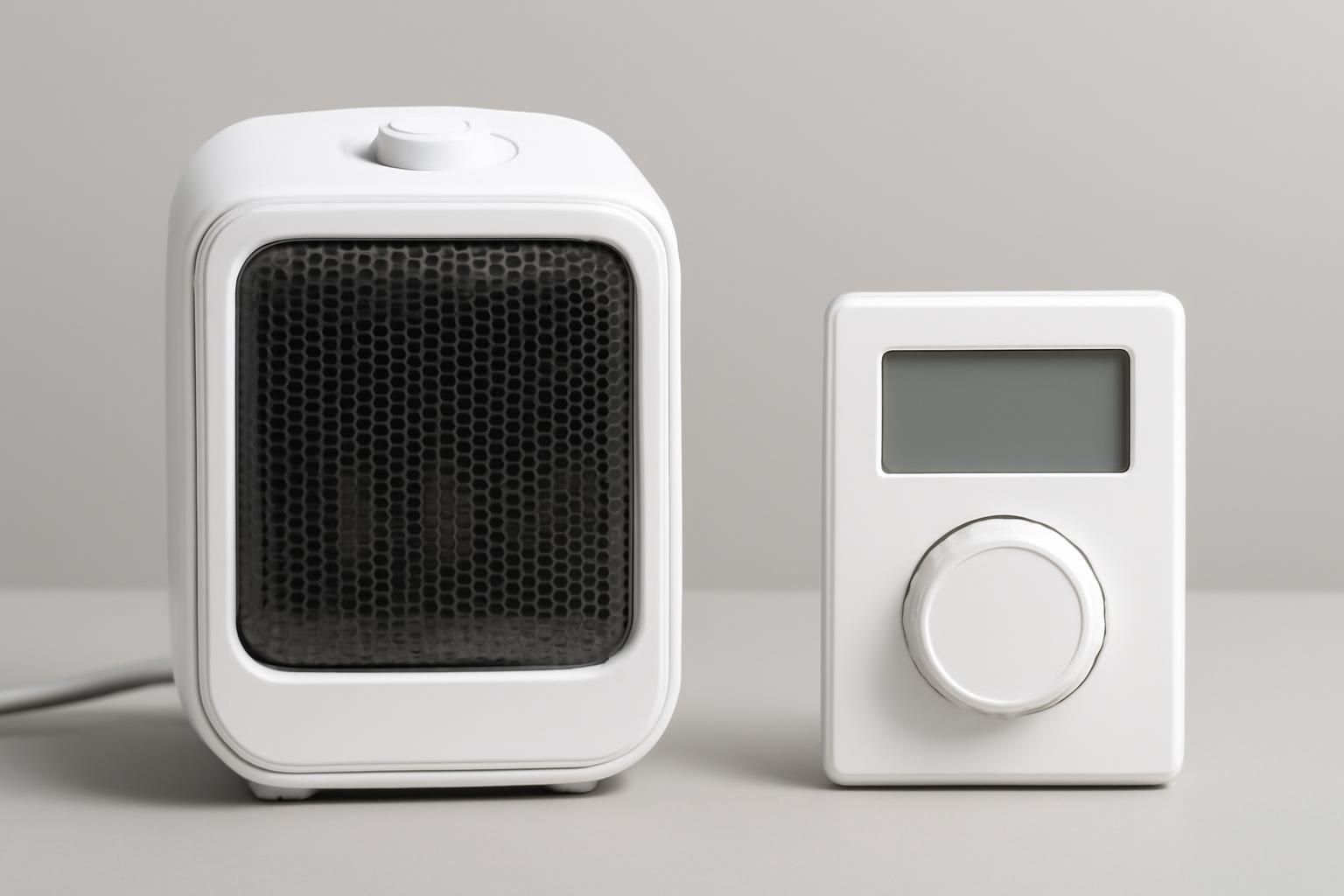
If you searched for “watt a BTU/h,” you’re probably trying to compare labels that do not seem to speak the same language. A plug-in heater may show watts. A window AC, heat pump, or central system may be sold by BTU/h. And when a room feels clammy, a system short-cycles, or a contractor recommends “more capacity,” it helps to know what those numbers actually describe. That homeowner-first approach is the whole point of HVAC Lens: read the system clearly before you pay for guesses.
The quick answer is this: for direct unit conversion, multiply watts by about 3.412 to get BTU/h. That works well for electric resistance heaters and quick label comparisons because 1 watt = 3.4121416331 Btu (IT)/h in standard conversion tables, usually rounded to 3.412 for everyday use (UnitConverters).
Where homeowners get tripped up is not the math itself. It is the context. A 1,500-watt space heater and a 12,000 BTU/h air conditioner may both involve watts and BTUs, but they are usually talking about different sides of the equipment. One usually describes electrical input that becomes heat very directly. The other often describes thermal capacity, while actual electrical draw depends on efficiency and operating conditions.
Below, you’ll get the conversion formula, the precise factor, a homeowner chart, real HVAC examples, and the practical ways this simple math can help you ask better questions about runtime, humidity, airflow, and sizing before a service call.
Watts and BTU/h Basics: Power Units for Home Heating and Cooling
A watt is a unit of power. A BTU/h is also a unit of power. In other words, both describe a rate rather than a total amount.
Reference conversion tables define the watt as the SI unit of power and describe Btu (IT)/hour as a customary power unit based on the BTU, the amount of heat associated with raising one pound of water by 1°F. They also distinguish power units like watts from energy units like watt-hours (UnitConverters).
That distinction matters more in HVAC than most homeowners expect. When you are standing in front of a thermostat or comparing product labels online, a lot of confusion comes from mixing up power and energy.
Here is the clean version:
- Watts (W) = a rate of electrical power right now
- BTU/h = a rate of heating or cooling right now
- Watt-hours (Wh) = total electrical energy over time
- BTU = total heat energy over time
So if a heater is labeled 1,500 watts, that tells you the rate at which it uses electrical power. If an air conditioner is labeled 12,000 BTU/h, that tells you the rate at which it can remove heat from the space under rating conditions. Neither label, by itself, tells the whole story about comfort, runtime, or utility cost.
For homeowners, these units tend to appear on different kinds of equipment for practical reasons:
- Portable electric heaters, baseboard heaters, and many electric appliances are usually labeled in watts because the household concern is electrical load.
- Window ACs, portable ACs, mini-splits, and central cooling systems are often marketed in BTU/h or tons because the homeowner usually wants to know comfort capacity.
That is why the conversion is useful. It gives you a bridge between the electrical side and the heating/cooling side. It also helps you avoid one of the most common mistakes in HVAC conversations: assuming that a watt label and a BTU/h label are automatically talking about the same thing.
They often are not.
With electric resistance heat, the relationship is straightforward. Electrical input becomes heat very directly, so converting watts to BTU/h gives a practical estimate of output. With air conditioners and heat pumps, the system is moving heat rather than simply creating it through resistance. That means the advertised BTU/h is usually capacity, while the electrical watt draw depends on efficiency.
One small wording note also helps: in HVAC writing, you will see BTU/h and BTU/hr used interchangeably. The formatting changes, but the meaning is the same: BTUs per hour.
The Core Conversion Formula: Watts to BTU/h and Back
For normal homeowner use, the formula is simple: BTU/h = watts × 3.412. To go the other way, use watts = BTU/h ÷ 3.412, or more precisely watts = BTU/h × 0.293071. Those are the standard household-friendly forms of the same conversion (UDPOWER).
If you want the reverse in a more explicit form, reference calculators also list 1 BTU/h = 0.29307107 watts and show that dividing by 3.412141633 gives the same answer (RapidTables).
A few quick equivalents come straight from those formulas:
- 1 watt ≈ 3.412 BTU/h
- 1 kilowatt ≈ 3,412 BTU/h
- 1 BTU/h ≈ 0.293 watt
That means you can do fast rough math in your head without a calculator. If you see 2,000 watts, think about 6,824 BTU/h. If you see 10,000 BTU/h, think about 2,931 thermal watts.
For electric resistance heaters, this direct conversion is usually the right homeowner tool because the electrical input and heat output line up closely enough for practical use. A 1,500-watt space heater works out to about 5,118 BTU/h, which is why that number shows up so often in heater comparisons and room-heating guides.
A useful way to remember it is:
- Going from watts to BTU/h: multiply by 3.412
- Going from BTU/h to watts: divide by 3.412
That is enough for most label reading, rough comparisons, and basic sanity checks. The only time you need to pause is when the appliance is not a simple resistance heater.
That pause matters most with ACs and heat pumps. If you convert 12,000 BTU/h to watts, you get about 3,517 thermal watts. But that does not mean the air conditioner necessarily draws 3,517 watts from the panel. It means the cooling capacity is thermally equivalent to that power rate. The actual electrical input is usually much lower because the system is moving heat with a refrigeration cycle.
Precise Conversion Factor: Why 3.412141633 and Slight Variations
If you compare calculators, charts, and product guides, you will see a family of values that all look almost the same:
- 3.41
- 3.412
- 3.41214
- 3.412141633
These are not competing formulas. They are just different rounding choices.
A standard conversion reference lists 1 W = 3.4121416331 Btu (IT)/h and 1 Btu (IT)/h = 0.2930710702 W, with the target unit identified as Btu (IT)/hour rather than some other historical BTU variant.
For homeowners, the practical difference between those versions is tiny. Using 3.412 instead of 3.412141633 on a 1,500-watt heater still lands you at essentially the same answer: about 5,118 BTU/h. You would not choose different equipment based on that rounding difference.
So why do the numbers vary at all?
Because different contexts need different precision.
- 3.41 is a very rough shortcut.
- 3.412 is the common homeowner-friendly factor.
- 3.41214 is a more technical rounded value.
- 3.412141633 is the high-precision expression of the same relationship.
That is why two charts can look slightly different while both being correct enough for their purpose. One may be designed for quick reading. Another may be designed for spreadsheets, calculators, or engineering work where repeated rounding can accumulate.
The Btu (IT) detail matters mostly for technical accuracy, not day-to-day home troubleshooting. In ordinary residential HVAC use, the main point is that the conversion standard is stable. The differences you see are almost always about rounding, not disagreement.
A good homeowner rule is simple:
- Use 3.412 for quick checks.
- Use the longer factor only when precision actually matters.
- Do not confuse a precise conversion factor with a performance guarantee.
That last part is worth emphasizing. A mathematically exact conversion does not tell you whether the room will feel comfortable, whether the system is oversized, whether airflow is restricted, or whether the equipment is efficient. It only converts one unit of rate into another.
Quick Reference Table: Common Watts to BTU/h Conversions
For everyday label reading, here are the values homeowners ask about most often. The tables below use the rounded 3.412 factor for quick math; the reverse values use the standard inverse conversion and are rounded to the nearest whole watt for readability (UDPOWER).
Watts to BTU/h
| Watts | BTU/h |
|---|---|
| 100 W | 341 BTU/h |
| 500 W | 1,706 BTU/h |
| 1,000 W | 3,412 BTU/h |
| 1,500 W | 5,118 BTU/h |
| 2,000 W | 6,824 BTU/h |
| 3,000 W | 10,236 BTU/h |
| 5,000 W | 17,060 BTU/h |
BTU/h to Watts
| BTU/h | Thermal watts |
|---|---|
| 5,000 BTU/h | 1,465 W |
| 10,000 BTU/h | 2,931 W |
| 12,000 BTU/h | 3,517 W |
| 18,000 BTU/h | 5,275 W |
| 24,000 BTU/h | 7,034 W |
In residential cooling, 12,000 BTU/h = 1 ton of cooling, which is why you will see tonnage and BTU/h used side by side in product listings and contractor discussions (Trane).
The most important caution in the second table is the word thermal. Those watt figures are unit conversions of capacity. They are not automatically the electrical draw you should expect on a breaker, generator, or battery.
That is where homeowners often make a wrong leap. They see 12,000 BTU/h, divide by 3.412, get 3,517 watts, and assume that must be the operating wattage of the unit. For cooling equipment, that is usually not how the rating works.
The table is still useful, though. It helps you compare scale. A 5,000 BTU/h window unit is much smaller than a 24,000 BTU/h central or ductless system. A 1,500-watt space heater at 5,118 BTU/h is helpful in one room, but it is not remotely the same thing as a multi-ton whole-house system.
A practical way to use the chart is this:
- Use the left table to understand what a watt-labeled electric heater is roughly capable of in heating terms.
- Use the right table to understand the thermal size of a BTU/h-labeled cooling system.
- Then ask whether you are comparing output capacity or electrical input, because those are not interchangeable for ACs and heat pumps.
Real HVAC Examples: Heaters, ACs and Heat Pumps
The cleanest homeowner example is still a simple electric heater. A 1,500-watt heater converts to about 5,118 BTU/h using the usual formula. Homeowner conversion guides use that same example because it shows how direct the math is for resistance heat: 1,500 × 3.412 ≈ 5,118.
That example is useful because it sets a realistic expectation. A small plug-in heater can absolutely make a bedroom or office more comfortable. 5,118 BTU/h is meaningful room heat, not whole-home system capacity.
Now compare that with a familiar AC rating.
A 12,000 BTU/h air conditioner converts to about 3,517 thermal watts, but that number represents cooling capacity, not automatic electrical consumption. HVAC explainers aimed at homeowners make this distinction clearly: BTU/h-to-watts conversion expresses cooling output in electrical terms, but it does not by itself tell you what the unit pulls from the panel (AC Direct).
That is where an efficiency rating enters the conversation. A common steady-state estimate is:
- electrical watts ≈ BTU/h ÷ EER
So if an AC is rated at 12,000 BTU/h and has an EER of 12, its running input is roughly 1,000 watts. Two units can have the same 12,000 BTU/h capacity and still draw different wattage because one is more efficient than the other.
For homeowners, this clears up a lot of mixed-label confusion:
Example 1: Space heater
- Nameplate: 1,500 W
- Conversion: 1,500 × 3.412 = 5,118 BTU/h
- Meaning: roughly 5,118 BTU/h of heat output
Example 2: Window or portable AC
- Advertised capacity: 12,000 BTU/h
- Thermal equivalent: 12,000 ÷ 3.412 ≈ 3,517 thermal watts
- Electrical input: depends on EER or rated input watts, not just the unit conversion
Example 3: Central or ductless system labels
- A contractor may discuss tons
- A brochure may show BTU/h
- A nameplate may list volts, amps, and sometimes watts
- Those are not redundant labels; they describe different parts of the same system
That last point matters during service calls. Homeowners often look at one number and assume it should explain every complaint. But comfort problems live in the space between those numbers:
- capacity,
- electrical input,
- runtime,
- airflow,
- humidity removal,
- and how long the system actually stays on.
That is why a system can be “strong” on paper and still feel wrong in the house.
A fast-cooling, short-cycling AC may have plenty of BTU/h capacity and still leave the home sticky because it is not running long enough to manage moisture well. A heater can be drawing exactly what its label says and still fail to warm the whole house because the load is larger than the heater’s output. The math is helpful, but only when you know which side of the machine the number belongs to.
Efficiency Matters: Adjusting for ACs, Heat Pumps and Real-World Use
The direct watts-to-BTU/h formula is a unit conversion. It is not a universal performance formula for every appliance.
That distinction is easy to miss because resistance heaters behave so simply. Put electrical power in, get heat out, and the homeowner-facing conversion works cleanly. Cooling equipment and heat pumps are different because they move heat with refrigeration cycles and compressors.
A calculator built for HVAC applications shows this clearly: for resistive heating, 1 watt = 3.41214 BTU/h, but when a heat pump operates at COP 3.5, 1,000 watts of electrical input can produce about 11,943 BTU/h of heating output (WattBuild).
That is the heart of the efficiency issue.
Resistive heaters: direct and simple
With resistance heat, the homeowner shortcut works well:
- Watts are the electrical input
- BTU/h is the resulting heat rate
- The conversion is close enough to direct for practical use
So a 1,500W space heater at about 5,118 BTU/h is exactly the kind of case where the conversion does what homeowners want it to do.
Air conditioners: capacity is not input
With an AC, the BTU/h rating is usually telling you how much heat the system can remove from the air. The electrical watt draw depends on efficiency, equipment design, and conditions.
That is why the same 12,000 BTU/h class of equipment can have different power demands. A better EER or SEER means fewer watts for the same nominal capacity.
Heat pumps: output can exceed the direct conversion
A heat pump complicates the comparison in a good way. Because it moves heat rather than generating it directly through resistance, the heating output can be several times the electrical input when conditions are favorable.
For homeowners, the practical takeaway is this:
- Use watts to think about electrical load.
- Use BTU/h to think about heating or cooling capacity.
- Use EER, SEER, or COP when you need to connect the two.
That also explains why back-calculating electrical demand from capacity can be misleading when you are planning around generators, solar, or battery backup. Capacity labels tell you what the system can do for comfort. They do not automatically tell you what it will draw from the power source, especially once cycling, startup behavior, staging, and outdoor conditions enter the picture.
In HVAC troubleshooting, this is more than a technical footnote. It explains why a homeowner can say, “I have a 12,000 BTU unit, so why doesn’t the wattage line up?” The answer is that one number is talking about thermal output, while the other is talking about electrical input. Once you know that, the labels stop seeming contradictory.
Common Mistakes: Power vs Energy, and HVAC Pitfalls
The most common mistake is mixing up a rate with a total.
If someone says a heater is “5,118 BTU,” that is incomplete unless they mean a total quantity of heat over some time period. If they say it is 5,118 BTU/h, now they are describing the hourly heat rate. The same goes for electricity: 1,500 watts is a power rate, while 1.5 kilowatt-hours is the amount of electrical energy used over an hour at that rate.
The next mistake is assuming the same direct conversion applies to every HVAC appliance in the same way. For a resistance heater, that is usually fine. For an air conditioner, converting BTU/h and watts gives you a thermal equivalence, not automatic electrical demand. Efficiency ratios, staging, and cycling behavior still matter.
Another trap is using conversion math as if it were a diagnostic tool all by itself. The math can clarify equipment scale, but it cannot tell you whether the problem is sizing, airflow, controls, thermostat placement, or maintenance. Home systems often produce similar symptoms for very different reasons.
A clogged filter is a good example. Reduced airflow can make a system feel weak, uneven, noisy, or “off” even when the equipment size is not the real problem. If you want a quick maintenance baseline before you start blaming tonnage or capacity, our guide on how often to replace an HVAC filter explains why many standard 1-inch filters end up in the 30- to 90-day range, but why pets, dust, runtime, and return-air conditions matter more than a generic calendar reminder.
Short cycling is another example. Homeowners often hear that short cycles mean oversizing, and sometimes that is true. But it is not automatic. Controls, refrigerant issues, thermostat location, and airflow restrictions can create patterns that look similar from the living room. If your system cools quickly but leaves the air damp or uneven, our article on signs an air conditioner is oversized helps separate common oversizing clues from simpler airflow or maintenance issues.
A few other mistakes show up often in watt-to-BTU/h conversations:
- treating thermal watts as the same thing as electrical watts
- ignoring that compressor startup or cycling can make real draw vary
- comparing a portable heater’s output with a whole-house system’s capacity as if they were substitutes
- using one conversion chart to jump straight to equipment replacement decisions
The better use of the math is narrower and more realistic. It helps you compare labels accurately, understand the scale of the equipment, and notice when a claim sounds off.
That is especially important when a house “feels wrong.” A sticky room could point to oversizing, but it could also point to short runtimes from a control problem. Weak airflow could be a filter, a duct issue, or a blower issue.
In other words: the conversion math is useful, but context is the part that turns it into good homeowner judgment.
Tie to Home HVAC Checks: Spotting Issues with Conversions
So how does converting watts to BTU/h actually help you around the house?
Mostly by giving you a reality check.
If you know a plug-in heater is 1,500W, you know it is only about 5,118 BTU/h. That helps explain why it can improve one room without meaningfully replacing a central heating system. You stop expecting small equipment to solve a big-load problem.
If you know an AC is 12,000 BTU/h, you can place that in a bigger HVAC frame: 1 ton of cooling. That number matters because BTUs are part of the sizing language contractors use, and oversizing can create comfort problems even when the thermostat reaches setpoint quickly (Trane).
That does not mean you should size a house from one chart. It means you can use the chart to ask sharper questions.
Use the conversion to frame what you notice
Before a service call, it helps to write down:
- the equipment’s advertised BTU/h or tonnage
- any visible watts, volts, or amps on the nameplate
- how long the system tends to run on mild days versus very hot or very cold days
- whether the house feels cold but clammy
- which rooms feel different from the thermostat area
- whether vent airflow seems weaker than usual
- when the filter was last changed
- whether the system seems to satisfy the thermostat unusually fast
That list is valuable because it gives the technician useful context instead of just a verdict like “it’s too small” or “I think it’s oversized.”
What the numbers can help you question
Once you understand the conversion, you can make better comparisons:
- Does the heater’s watt rating translate to an output that fits what you expect it to do?
- Does the AC’s advertised BTU/h sound reasonable for the kind of equipment installed?
- Are you accidentally comparing capacity on one label to electrical draw on another?
- If a contractor talks about tonnage, do you know the BTU/h scale that goes with it?
- If comfort is poor, is the issue really capacity, or could it be runtime and dehumidification?
Those are better questions than “Should I just get a bigger unit?”
Good contractor questions this math supports
When a system feels off, the most helpful homeowner questions are usually the least dramatic:
- “Is this BTU/h capacity consistent with a load calculation for the house?”
- “If the thermostat is satisfied quickly but the house stays sticky, are we looking at oversizing, airflow, or controls?”
- “What runtime pattern would you expect on a mild day if the system were matched well?”
- “Do the nameplate electrical numbers line up with what this equipment should be drawing?”
- “Should we rule out filter, duct, or thermostat-location issues before deciding the equipment is wrong?”
Those questions are especially helpful because a lot of residential comfort complaints live in the overlap between sizing and system behavior. A too-large unit can cool fast and dehumidify poorly. A restricted system can behave weakly without being undersized. A thermostat in the wrong spot can make the equipment appear more capable than the rest of the house feels.
The conversion math does not diagnose those issues. What it does is help you avoid apples-to-oranges thinking.
And that is a bigger advantage than it sounds. Homeowners often get pushed into vague equipment talk because the labels are confusing. Once you understand that watts and BTU/h can both describe rates, but often from different sides of the equipment, the conversation gets clearer fast.
Use 3.412 for quick checks. Use EER, SEER, or COP when you need to relate capacity to electrical input. Use runtime, humidity, airflow, and room-to-room comfort as the clues that give those numbers real meaning. And if you are considering a repair or replacement decision, treat this as general information and confirm major sizing or installation choices with a licensed HVAC professional.
Below are quick answers to the homeowner questions that come up most often.
How many BTU/h is 1 watt?
About 3.412 BTU/h. If you want the high-precision standard-conversion form, one reference lists 1 W = 3.412141633 Btu (IT)/h, usually rounded for everyday use (Magtrol).
What’s 1500 watts in BTU/h for a space heater?
A 1,500-watt space heater is about 5,118 BTU/h using the common formula watts × 3.412. That is why 1,500W is such a common benchmark in portable-heater comparisons (Lipower).
How to convert 12000 BTU/h AC to watts?
First decide which watts you mean. The thermal equivalent is 12,000 ÷ 3.412 ≈ 3,517 watts of cooling output. But that does not automatically tell you electrical draw. For input watts, homeowners usually need the unit’s EER or rated input wattage instead (AC Direct).
Does efficiency change the watts to BTU/h formula?
It does not change the base unit conversion, but it changes how you apply it to real equipment. A heat-pump example shows 1,000 watts at COP 3.5 producing about 11,943 BTU/h, which is much higher than direct resistive-heating output at the same wattage (WattBuild).
BTU vs BTU/h: what’s the difference?
BTU is a total amount of heat energy. BTU/h is the rate of heat transfer per hour. The same kind of difference exists between watt-hours and watts: one is a total over time, and one is the rate at a given moment.