
Cooling
The Name of That Outdoor AC Box—and What Is Actually Inside It
"Outdoor unit" is safest for an unknown system. For cooling-only central AC, "condensing unit" is more exact. A heat-pump coil becomes an evaporator in heating.
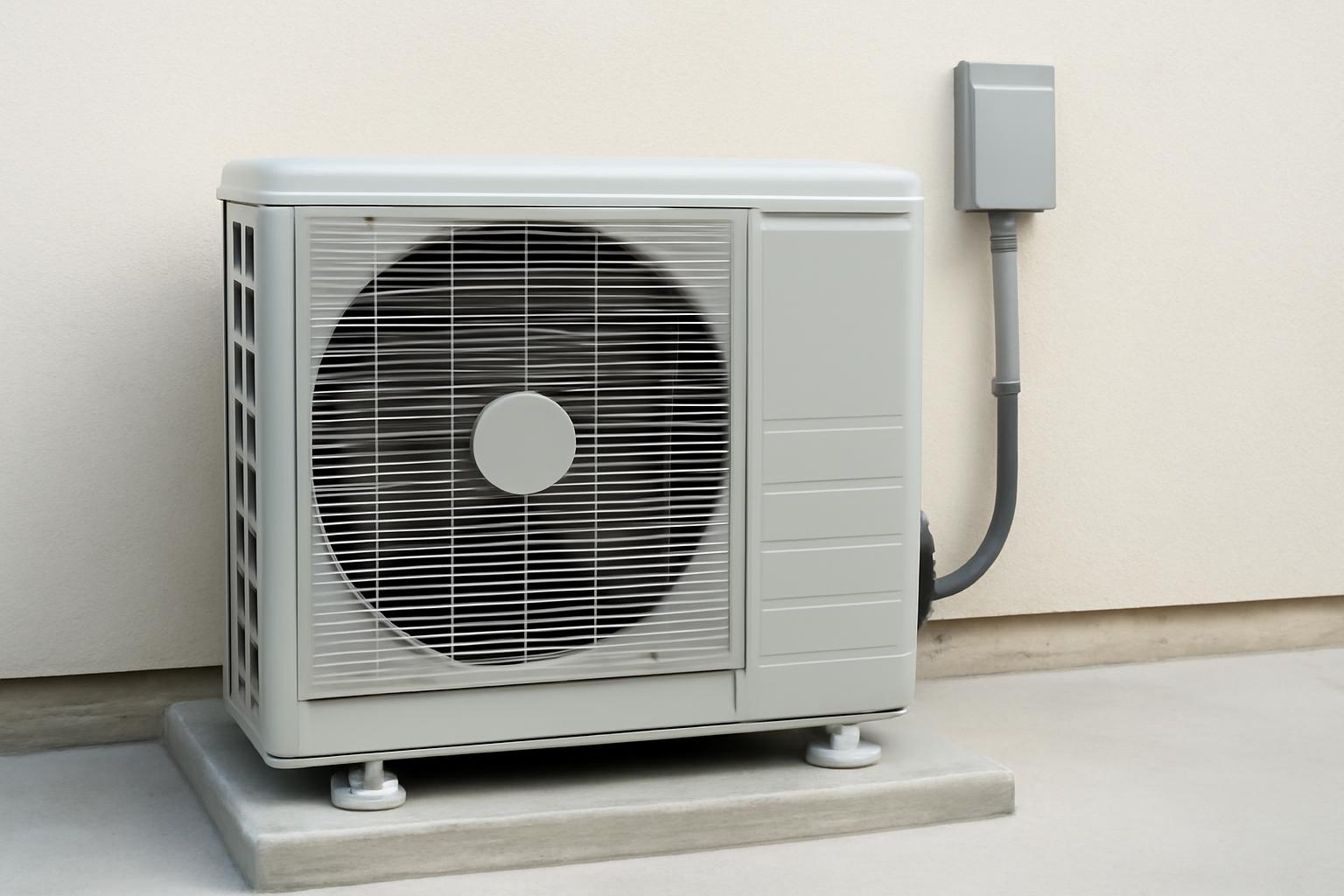
The Direct Answer: Outdoor Unit, Condensing Unit, or Condenser
The broad, system-neutral name for the large air-conditioning equipment outside your house is the outdoor unit.
For a typical cooling-only central split air conditioner, the more precise term is condensing unit or outdoor condensing unit. In everyday conversation, homeowners and HVAC professionals may also call it the condenser, condenser unit, AC condenser, or outdoor AC unit. American Standard, for example, uses both “outdoor unit” and “condenser unit” for exterior equipment in an indoor/outdoor HVAC system (American Standard’s indoor/outdoor system glossary).
Several names coexist because everyday and technical language overlap:
- Outdoor unit describes the equipment by location without assuming whether it is an air conditioner, heat pump, or another configuration.
- Condensing unit describes the complete outdoor assembly of a conventional cooling-only split air conditioner.
- Condenser is widely understood as shorthand for that assembly, but it can also refer more narrowly to the condenser coil or the heat-rejection function.
That distinction matters. If a technician says, “The condenser coil is damaged,” the technician is identifying a particular heat-transfer component.
| Term | Usual meaning | When to use it |
|---|---|---|
| Outdoor unit | The complete HVAC cabinet outside the home | Best general term when the equipment type is unknown |
| Condensing unit | The complete outdoor assembly of a typical cooling-only central split AC | Best precise term for a conventional central air conditioner |
| Condenser | Common shorthand for the outdoor assembly; sometimes the condenser function or coil | Fine in ordinary conversation, but potentially ambiguous |
| Condenser coil | The outdoor heat-transfer surface where refrigerant releases heat during cooling | Use when referring specifically to the coil |
| Compressor | An internal component that pressurizes and circulates refrigerant | Use only when discussing that component |
If your question is simply, “What is the outside unit of an air conditioner called?”, outdoor unit is the safest answer. If you know it is the outdoor half of a cooling-only central split AC, outdoor condensing unit is more exact.
The best name depends on the system configuration and, for a heat pump, its operating mode.
The Outdoor Unit Is Not Just the Compressor
The complete outdoor cabinet is not called the compressor. The compressor is one component housed inside the assembly.
A typical central AC outdoor unit has three core components: the compressor, condenser coil, and outdoor fan (Air Mechanical’s overview of condenser-unit parts).
The cabinet may also contain electrical, motor-control, and protective parts. For understanding its basic purpose, however, the compressor, coil, and fan are the key components.
The compressor
The compressor pressurizes refrigerant and helps circulate it through the refrigeration system.
Calling the entire outdoor unit “the compressor” is like calling a whole car “the engine.” The compressor is essential, but it is not the entire machine.
It is also inaccurate to say that the compressor alone turns refrigerant gas directly into liquid. The compressor raises the refrigerant’s pressure. The refrigerant subsequently releases heat and condenses in the condenser coil.
The condenser coil
The condenser coil is the outdoor heat-transfer surface.
During cooling, hot refrigerant passes through the coil and releases heat to the outdoor air. As it loses heat, the refrigerant condenses from gas into liquid. The condenser coil and compressor therefore perform related but distinct jobs.
The outdoor fan
The outdoor fan moves ambient air across the condenser coil. That airflow carries released heat away from the coil and into the surrounding outdoor air.
This fan is not the indoor blower that circulates conditioned air through rooms. The outdoor fan serves the outdoor coil; the indoor blower serves the living-space side of a ducted system.
A simplified labeled view would look like this:
          Warm air discharged outdoors
                      ↑
             ┌────────────────┐
             │  Outdoor fan   │
             ├────────────────┤
             │                │
             │   Compressor   │  ← housed inside cabinet
             │                │
             └────────────────┘
               Condenser coil
            around or within cabinet
The exact arrangement varies by make and model, but the naming relationship remains straightforward:
- The condensing unit is the complete assembly.
- The condenser coil is a heat-transfer component.
- The compressor pressurizes and circulates refrigerant.
- The fan moves outdoor air across the coil.
These are related terms, not interchangeable component names. A problem somewhere in the outdoor unit does not automatically mean that either the compressor or condenser coil has failed.
What the Outside Unit Does During Cooling
An air conditioner cools a home by absorbing heat indoors and releasing that heat outdoors. It does not create cold air at the outside cabinet and send that air into the house.
That is why a conventional split air conditioner has connected indoor and outdoor portions. The indoor side removes heat from the home’s air. Refrigerant carries that heat through the system, and the outdoor unit discharges it into the surrounding air.
In simplified sequence:
- Indoor heat absorption: Refrigerant absorbs heat at the indoor coil.
- Refrigerant movement: The heat-carrying refrigerant moves toward the outdoor unit.
- Compression: The compressor raises the refrigerant’s pressure.
- Outdoor heat release: Refrigerant passes through the condenser coil while the fan moves outdoor air across it.
- Condensation: As the refrigerant releases heat, it condenses from gas to liquid.
- Return: The refrigerant continues through the closed circuit so it can absorb more indoor heat.
Indoor coil absorbs heat
          ↓
Refrigerant carries heat outdoors
          ↓
Compressor raises refrigerant pressure
          ↓
Condenser coil releases heat to outdoor air
          ↓
Refrigerant condenses and continues through the cycle
The compressor prepares and moves the refrigerant, but the condenser coil and outdoor airflow perform the outdoor heat-transfer work. Hot refrigerant enters the outdoor coil, releases heat as air passes across the coil, and condenses into liquid (Carrier’s explanation of condenser operation).
The unit is outside because the heat removed from your rooms must be discharged outside the conditioned space. Returning that heat directly to the house would work against the cooling process.
The outdoor unit’s central cooling role is therefore to reject heat removed from indoors. The indoor blower and ductwork—or the indoor heads in a ductless system—handle room air.
Warm air leaving the outdoor unit during cooling is consistent with that process. It means heat is being discharged outside, not that the outdoor cabinet is sending hot air into the home.
Does the Outdoor AC Unit Bring Outside Air Into the House?
A conventional split-system outdoor unit ordinarily does not bring outside air into the home.
The system performs heat exchange, not direct air exchange:
- The outdoor fan moves outdoor air across the outdoor coil.
- The indoor blower moves indoor air across the indoor coil.
- Refrigerant circulates through tubing between the two sides, carrying heat.
- The indoor and outdoor air streams do not normally travel through the refrigerant lines or outdoor cabinet into one another.
This is why you can feel warm air leaving the outside unit while indoor vents deliver cooler air. The outdoor fan moves ambient air across a warm coil and carries released heat away. Indoor air circulates separately.
Myth: The large visible fan outside pulls fresh air into the home.
Fact: In a conventional split cooling system, the fan serves the outdoor condenser coil. It moves outdoor air across the coil so heat can be released; it is not normally a fresh-air supply fan for the rooms.
The ordinary outdoor unit expels heat rather than supplying outdoor air to the interior (Della’s guide to the role of an AC outdoor unit).
That answer is limited to a conventional split-system air conditioner. A home can have separate ventilation equipment, outdoor-air ducting, or a combined HVAC installation designed to introduce outside air. Those features do not change the normal role of the visible outdoor fan, but they make it too broad to say that an HVAC installation can never bring in outdoor air.
When the Outside Unit Is Actually a Heat Pump
An outdoor HVAC cabinet may be either:
- A cooling-only air conditioner, or
- A heat pump that can provide cooling and reversible-cycle heating.
The two can look similar and perform similar work during cooling. Both absorb heat indoors and release it outdoors. The key functional difference is that a heat pump can reverse the refrigeration cycle to move heat indoors during heating, whereas a cooling-only air conditioner does not provide heat through that reversed cycle (Carrier’s heat pump versus air conditioner guide).
This changes the technical name of the outdoor coil:
| Operating mode | Outdoor coil’s role |
|---|---|
| Cooling | Acts as the condenser, releasing heat outdoors |
| Heat-pump heating | Acts as the evaporator, collecting heat outdoors |
During cooling, calling the heat pump’s outside coil the condenser coil accurately describes its role. During heating, however, the same coil functions as the evaporator because the refrigeration cycle has reversed (Goodman’s explanation of air-conditioner and heat-pump operation).
Calling a heat-pump outdoor unit “the condenser” in every season is therefore technically imprecise. The expression may still appear in ordinary conversation or broad product descriptions, but it does not capture the coil’s changing function.
When the outdoor refrigeration unit is known to provide reversible heating and cooling, heat-pump outdoor unit is the clearest term. It identifies the complete cabinet without assigning it a condenser role that applies only during cooling.
Do not try to identify a heat pump solely from the cabinet’s general appearance. Cooling-only units and heat pumps can resemble one another, and designs vary. If the equipment type matters for service or replacement, confirm it through reliable equipment documentation or a qualified HVAC professional.
How the Name Changes With the System Configuration
The phrase outside unit can describe several arrangements. The most precise name depends on how the system is configured.
Conventional central split air conditioning
A conventional split system has connected indoor and outdoor components. For a cooling-only central split AC, the outside assembly is appropriately called the condensing unit or outdoor condensing unit.
The indoor portion handles indoor heat absorption and room-air circulation. The outdoor portion houses the compressor, condenser coil, and fan used for heat rejection.
Split-system heat pump
A split-system heat pump also has indoor and outdoor portions, but it can reverse the direction of heat transfer. Because the outdoor coil changes roles with operating mode, heat-pump outdoor unit is clearer than calling the cabinet a condenser at all times.
This term should be used when the outdoor refrigeration unit itself is known to provide reversible heating and cooling—not merely because the home has both air conditioning and a separate source of heat.
Ductless mini-split
A ductless mini-split connects an exterior unit to one or more indoor units without conventional central ductwork for room distribution.
Mini-split outdoor unit is the clearest broad term. If the equipment is a reversible heat pump, outdoor heat-pump unit is also accurate. These names avoid assigning the outdoor coil a role that changes between heating and cooling.
Packaged HVAC system
A packaged HVAC system differs from a conventional split system. Instead of dividing major refrigeration components between indoor and outdoor assemblies, it combines major components—including the compressor, condenser, and evaporator—inside one outdoor cabinet (Carrier’s guide to AC condenser configurations).
Because the evaporator is also part of that cabinet, calling the entire package “the condenser” can obscure the configuration. Packaged HVAC unit or packaged unit is clearer.
| System configuration | What is outside? | Recommended term |
|---|---|---|
| Central split AC, cooling only | Separate outdoor assembly connected to indoor equipment | Outdoor condensing unit |
| Split-system heat pump | Reversible outdoor refrigeration unit | Heat-pump outdoor unit |
| Ductless heat pump or mini-split | Outdoor unit connected to one or more ductless indoor units | Mini-split outdoor unit or outdoor heat-pump unit |
| Packaged HVAC | Major refrigeration components combined in one outdoor cabinet | Packaged HVAC unit |
| Configuration unknown | Exterior HVAC equipment of uncertain type | Outdoor unit |
These systems do not necessarily contain identical parts or arrange them in the same way. When you do not know the configuration, outdoor unit remains the safest umbrella term.
What to Call It When Speaking With an HVAC Technician
When requesting service, use the most accurate term you know without guessing:
- If the equipment type is uncertain, say outdoor unit.
- If it is a known cooling-only central split air conditioner, say outdoor condensing unit.
- If the outdoor refrigeration unit is known to provide reversible heating and cooling, say heat-pump outdoor unit.
Useful descriptions include:
- “The outdoor unit is not running.”
- “The fan on the outdoor condensing unit stopped.”
- “I believe this is the heat-pump outdoor unit.”
- “The outdoor cabinet is running, but I do not feel air moving from the fan.”
- “I hear a sound from the outside unit when cooling starts.”
These statements report a location and an observed behavior. They do not assume which internal component has failed.
By contrast, “My compressor failed” identifies a specific internal component and implies a diagnosis. A stationary fan, unusual noise, or lack of cooling does not by itself establish that the compressor, condenser coil, or another particular part is defective.
You can tell a technician what you see, hear, or feel and whether the behavior occurs during heating or cooling. That external observation is different from attempting internal service. Do not open sealed parts or change refrigerant-side settings yourself (HVAC Lens homeowner guidance).
HVAC Lens describes itself as a practical guide for homeowners, not a program for training readers as technicians. Its terms state that the site provides general information rather than contractor advice and recommends confirming major equipment changes with a licensed professional because HVAC equipment varies by home, climate, and installation (HVAC Lens Terms & Conditions).
The practical vocabulary is simple:
- Use outdoor unit when speaking generally.
- Use outdoor condensing unit for a cooling-only central split AC.
- Use heat-pump outdoor unit for an outdoor refrigeration unit known to provide reversible heating and cooling.
The compressor and condenser coil are components of the larger assembly, not interchangeable names for it. If something appears wrong, report the behavior you observe rather than guessing which internal part has failed.
Frequently Asked Questions
Is the outside AC unit called a condenser or a condensing unit?
Both terms are commonly used. For the complete outside assembly of a typical cooling-only central split air conditioner, condensing unit is more precise.
Condenser is familiar shorthand, but it can also refer specifically to the condenser coil or heat-rejection function. If you do not know the equipment type, call it the outdoor unit.
Is the condenser the same thing as the compressor?
No. The compressor pressurizes and circulates refrigerant and is normally housed inside the outdoor cabinet. The condenser coil is the heat-transfer surface where refrigerant releases heat during cooling.
Even when “condenser” is used informally for the complete outdoor assembly, the compressor remains one component inside that assembly.
Does the outside AC unit pull fresh air into the house?
A conventional split-system outdoor unit ordinarily does not pull fresh air into the home. Its fan moves outdoor air across the condenser coil so heat can be released. Refrigerant—not a stream of outdoor air—carries heat between the indoor and outdoor portions.
A home may have separate ventilation equipment designed to introduce outdoor air, but that is distinct from the normal function of the outdoor AC fan.
Is a heat pump outdoor unit also called a condenser?
It may be called a condenser informally, especially in discussions of cooling. Technically, the name is mode-dependent.
During cooling, the heat pump’s outdoor coil acts as a condenser and releases heat. During heating, the cycle reverses and that coil acts as an evaporator, collecting heat outdoors. Heat-pump outdoor unit is therefore the more consistently accurate name for the complete cabinet.
What is the outside part of a ductless mini-split called?
The clearest name is the mini-split outdoor unit. If it is a reversible system that provides heating and cooling, outdoor heat-pump unit is also accurate.
Calling it a condenser may be understood during cooling, but outdoor unit avoids confusion because the outdoor coil’s function changes when a heat-pump mini-split switches to heating mode.