
Cooling
Why Your AC Won’t Shut Off—and What to Check First
If it reaches and maintains the setpoint with normal airflow and reasonable comfort, runtime alone does not establish a malfunction.
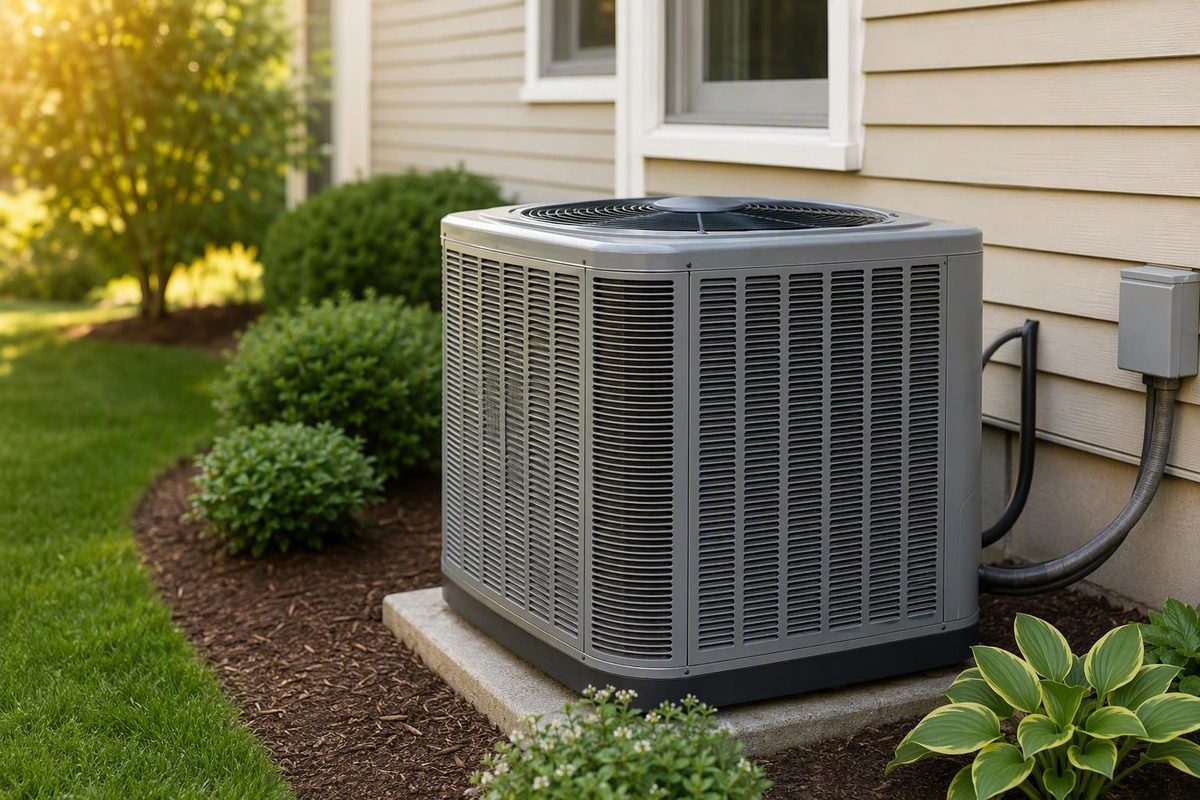
An air conditioner that runs continuously is not automatically broken. During extreme heat, high humidity, or intense afternoon sun, a central AC system may operate for long stretches simply to match the heat entering the home. The more useful question is whether it reaches and maintains the thermostat setting while keeping the home comfortable.
If the indoor temperature remains above the setpoint, airflow has weakened, or the vents are blowing warm air, the long runtime deserves attention. Ice, unexpected water, burning odors, abnormal noise, or recurring electrical trouble make the situation more urgent.
Start with three questions:
- Does the home reach the thermostat setpoint?
- Is active cooling running, or is only the indoor blower operating?
- Are there warning signs that require you to stop the system?
Those answers help distinguish heavy but potentially normal operation from a control setting, airflow restriction, heat-transfer problem, refrigerant concern, building-load issue, or equipment fault.
First Decide Whether the Long Runtime Is Normal or a Warning
Near-continuous operation can be normal when outdoor heat, humidity, or solar gain creates an unusually high cooling load. If the system reaches the requested temperature, maintains it, produces normal airflow, and keeps the home reasonably comfortable, runtime alone does not establish a malfunction. Longer cooling runs can also support humidity removal because air continues passing over the cold indoor coil.
Use setpoint attainment as the primary dividing line:
- Less concerning: The thermostat is set to 74°F, the home reaches about 74°F, comfort is acceptable, and no other symptoms appear.
- More concerning: The thermostat is set to 74°F, the system runs continuously, and the indoor temperature remains at 78°F or continues rising.
Coolray makes the same practical distinction in its guide to constant AC operation: severe outdoor heat may justify extended operation, but failure to reach the desired indoor temperature points toward a performance problem that needs investigation.
Compare the system with its own prior performance under similar conditions, not with a universal cycle length. Ask:
- Did it maintain this setpoint during comparable weather last summer?
- Is the thermostat set lower than usual?
- Is today substantially hotter, more humid, or sunnier?
- Are more people, cooking appliances, computers, or other heat sources active?
- Did the behavior change suddenly after a filter, thermostat, duct, or equipment change?
There is no single pass-fail number of minutes per cycle that applies to every home. Runtime changes with outdoor temperature, humidity, thermostat setting, insulation, air leakage, duct condition, sunlight, occupancy, indoor heat sources, and system capacity. Published cycle-length figures are generally rules of thumb, not universal diagnostic standards.
Reassuring context
Long operation is less alarming when all of the following are true:
- The home reaches and maintains the setpoint.
- Air from the vents feels cool and airflow remains consistent.
- Rooms are reasonably even and comfortable.
- Indoor humidity is acceptable.
- There is no visible ice or unexpected water.
- There are no new odors, severe noises, startup problems, or recurring breaker trips.
- The behavior is consistent with unusually demanding weather.
Problem context
Arrange further diagnosis when one or more of these conditions accompanies the long runtime:
- The indoor temperature never reaches the setpoint.
- The temperature keeps rising during an active cooling call.
- Vent air feels warm or insufficiently cool.
- Airflow has become noticeably weak.
- Some rooms remain persistently hot or humid.
- Ice appears on the indoor coil or refrigerant line.
- Water collects around the indoor equipment.
- The system makes new hissing, grinding, or rattling sounds.
- Operation has changed sharply from its previous pattern.
A higher electricity bill can support the overall pattern, but it cannot diagnose an HVAC failure. Weather, electricity rates, occupancy, thermostat settings, and household activity may all affect the total.
Finally, distinguish continuous operation from short cycling. Short cycling means the air conditioner starts and stops repeatedly before reaching the setpoint. It is a different symptom with a different diagnostic path; dirty filters, controls, refrigerant conditions, and oversized equipment are among the possibilities. Lennox defines short cycling as repeated brief runs that end before the thermostat is satisfied.
Find Out What Is Actually Running
Air coming from the vents does not necessarily mean the compressor and outdoor unit are still cooling. A central system has an indoor blower that moves air through the ducts and an outdoor unit that operates during active cooling. The blower can continue running even after the cooling call ends.
Check the thermostat first:
- Confirm that the system mode is set to Cool.
- Note the displayed indoor temperature and cooling setpoint.
- Look for a cooling indicator, such as a snowflake or “Cool On.”
- Check whether the fan is set to On or Auto.
With the fan set to On, the indoor blower may operate continuously whether or not the compressor is cooling. With the fan set to Auto, the blower generally runs in connection with an active cooling call. Carrier identifies the fan setting as one reason homeowners may hear or feel continuous airflow even after active cooling has stopped in its air-conditioner troubleshooting guidance.
From a safe distance, observe the system:
- Is air coming from the supply vents?
- Does the thermostat indicate an active cooling call?
- Can you hear or see that the outdoor unit is operating?
- Has the outdoor unit stopped while indoor airflow continues?
Do not remove panels or reach through the outdoor grille. The purpose is only to determine whether indoor airflow and outdoor operation are occurring at the same time.
If air continues from the vents but the outdoor unit has stopped and the thermostat is no longer calling for cooling, check the fan setting before assuming the compressor runs nonstop. Changing the fan from On to Auto may resolve the apparent problem.
Also verify:
- The cooling setpoint is intentional and reasonably attainable.
- A programmed schedule has not lowered the setting unexpectedly.
- A temporary hold, away mode, or vacation mode is not active.
- Thermostat batteries are serviceable, if the model uses replaceable batteries.
- The thermostat is not being heated by direct sun, a lamp, electronics, or another unusual heat source.
If the house cools below the displayed setpoint while the thermostat continues calling for active cooling, a thermostat, sensor, wiring, or control problem is possible. That observation is useful, but it is not a definitive diagnosis. Thermostat wiring, sensors, internal controls, and electrical circuits should be evaluated by a qualified technician.
Check for Conditions That Require You to Stop
Safety takes priority over routine troubleshooting. Stop the system and obtain qualified help if you notice smoke, sparks, a burning or strongly electrical odor, flooding near electrical equipment, severe abnormal mechanical noise, or another clear electrical or fire warning. Broad HVAC safety guidance also advises homeowners not to continue troubleshooting equipment under these conditions or work inside sealed or high-voltage components. Meyer & Depew summarizes these stop conditions and homeowner safety limits.
A breaker that trips again after a single reset can indicate a deeper electrical fault. Do not keep resetting it in an attempt to force the system to run. Carrier advises that an immediate or repeated trip after a reset warrants professional attention and reserves high-voltage repairs for trained service personnel.
Visible ice on the indoor coil, air handler, or refrigerant line is also a reason to stop active cooling. Continuing to demand cooling does not identify or correct the cause. Use the bounded thaw response described later in this guide.
Other observations worth reporting include:
- Hissing
- Grinding
- Persistent rattling
- Failed startup accompanied by humming, burning odor, or electrical symptoms
- An outdoor unit that will not start during a cooling call
- An outdoor fan that is not turning while active cooling is requested
These signs do not prove that a compressor, fan motor, capacitor, refrigerant circuit, or another specific part has failed. They are observations for a technician, not a basis for opening the equipment.
Homeowners should not:
- Open sealed equipment compartments
- Bypass a safety switch
- Handle or add refrigerant
- Probe wiring or test high-voltage components
- Reach into equipment with moving parts
- Attempt internal blower, compressor, or control-board repairs
These limits are consistent with published homeowner guidance against opening sealed equipment, handling refrigerant, bypassing safety devices, or working on high-voltage components.
Follow the model-specific owner’s instructions where available. If you are uncomfortable with even a basic check—or cannot reach the equipment without climbing, moving heavy objects, or entering an unsafe area—stop and call a qualified professional.
Run the Safe Homeowner Checklist
Work from the lowest-risk, easiest-to-correct conditions toward the equipment. This checklist is meant to improve your observations, not turn an internal repair into a do-it-yourself project.
1. Verify the thermostat
Confirm:
- The mode is set to Cool.
- The setpoint is reasonable and has not been repeatedly lowered.
- The fan setting is intentional—usually Auto when testing whether cooling shuts off.
- The schedule, hold, away mode, and smart-home automations are correct.
- Batteries are serviceable where applicable.
- The thermostat is not exposed to direct sunlight or an unusual nearby heat source.
Record the setpoint and actual indoor temperature.
2. Close exterior openings and reduce obvious heat gain
Close open exterior doors and windows. Check less obvious openings, including a door to a hot garage or a window left slightly open in another room.
Notice whether the problem appears mainly during strong afternoon sun or while significant heat is being produced indoors. Cooking, laundry equipment, gatherings, computers, and other heat-generating activity can increase the cooling load.
While waiting for service, shade sun-exposed windows where practical and limit avoidable indoor heat sources. Do not block HVAC vents or returns.
3. Inspect the filter
Inspect the filter for:
- Visible dust loading or debris
- Collapse, damage, or gaps around the filter
- Correct airflow direction
- Correct dimensions and fit
- Compatibility with the filter cabinet and equipment guidance
A dirty, clogged, or overly restrictive filter can reduce airflow and lengthen cooling runtime. If the filter is visibly loaded, replace it with a compatible filter. Then observe whether vent airflow, room comfort, blower sound, and progress toward the setpoint improve.
Do not apply one universal replacement schedule to every system. Filter life depends on filter type and depth, system runtime, pets, dust, smoke, renovation debris, household activity, and manufacturer instructions. HVAC Lens provides more context in its guidance on HVAC filter replacement timing.
4. Open supplies and clear returns
Walk through the home and check normal supply vents and return grilles:
- Open supply registers intended to be open.
- Move furniture, rugs, curtains, boxes, and other objects away from supplies.
- Clear blocked return grilles.
- Note rooms where airflow differs substantially from the rest of the home.
Do not broadly close vents as an improvised balancing strategy. Restricting multiple outlets may create additional airflow problems rather than directing cooling neatly where you want it.
5. Inspect accessible outdoor clearance
From outside the equipment, look for leaves, grass clippings, vegetation, or loose debris visibly blocking airflow around the outdoor unit. Remove only material that can be reached safely without opening a panel or putting your hands near a fan, wiring, or other internal components.
Do not dismantle the cabinet or attempt internal coil cleaning as part of this check. Inspecting accessible clearance is different from servicing the equipment.
Observe, do not escalate
After completing the checklist, let the system operate without repeatedly lowering the thermostat. Record whether:
- The indoor temperature moves toward the setpoint
- Airflow improves
- Vent air remains cool
- The outdoor unit operates during the cooling call
- The system eventually satisfies the thermostat
If the temperature remains unchanged or rises, or if airflow, ice, water, noise, or electrical symptoms persist, stop at observation and arrange diagnosis.
Match the Symptom Pattern to Possible Causes
Continuous operation has overlapping causes. Organizing the possibilities by system function is more useful than trying to identify one failed component from a single symptom.
Controls
Control-related possibilities include:
- An unintended thermostat mode, setpoint, schedule, or hold
- The indoor fan being set to On
- A thermostat exposed to direct sun or another heat source
- A temperature sensor that does not represent the occupied space accurately
- Thermostat wiring or internal control faults
A control concern becomes more plausible when the system keeps actively cooling below the setpoint or when the cooling call does not match the displayed temperature. Internal testing belongs to a technician.
Airflow
If air feels cool but weak, possible causes include:
- A dirty or overly restrictive filter
- A blocked return grille
- Closed or obstructed supply vents
- A damaged, disconnected, restricted, or poorly sized duct
- A frozen evaporator coil
- A blower or blower-control fault
The AC may still be producing cool air, but too little conditioned air reaches the rooms. Filter and grille checks are appropriate for homeowners; blower testing and internal duct diagnosis generally are not.
Heat transfer
An air conditioner must absorb indoor heat at the evaporator coil and release that heat outdoors at the condenser coil. Conditions affecting either coil can reduce heat transfer:
- A dirty evaporator coil can impair indoor heat absorption.
- A dirty condenser coil can impair outdoor heat release.
- A frozen indoor coil can obstruct airflow and cooling.
- Outdoor-unit faults can interfere with heat rejection.
These conditions may produce long runtime, poor setpoint progress, warm or only slightly cool vent air, or ice. Do not diagnose a dirty indoor coil from vent temperature alone or open a sealed air handler to inspect an inaccessible coil.
Refrigerant performance
An incorrect refrigerant charge can reduce cooling performance. Possible accompanying observations include weak cooling, warm vent air, ice, water from thawing ice, or hissing. The same symptoms can arise from airflow, coil, control, or mechanical problems, so none proves a leak.
Refrigerant charge must be evaluated with technician tools. If refrigerant has escaped through a leak, the appropriate discussion is how the leak and charge problem will be diagnosed and corrected—not how often the system can be topped off.
Ducts and building load
Crushed, disconnected, damaged, or poorly sized ducts can also reduce airflow.
Cooling demand can increase because of:
- Air leakage around doors, windows, or other openings
- Weak insulation
- Direct solar gain
- Open exterior doors or windows
- High occupancy
- Cooking or other indoor heat sources
- Ducts passing through hot spaces
Uneven rooms deserve a room-by-room assessment. If only one or two rooms are affected, consider blocked vents, return-air limitations, duct or damper conditions, sunlight, and local heat gain before assuming the entire AC lacks capacity.
Equipment capacity
An undersized system may produce normally cool air with acceptable airflow yet run for extended periods and miss the setpoint on hot days. That is a possible pattern, not a sizing diagnosis.
Oversized equipment more commonly satisfies the thermostat quickly, stops, and repeats short runs before removing enough indoor moisture. Persistent humidity can result from inadequate overall cooling performance, but humidity plus nonstop operation does not by itself prove oversizing.
Warm air, weak airflow, ice, uneven temperatures, excess humidity, noise, and rising energy use overlap across several categories. Treat them as clues to document, not component diagnoses.
Understand Ice and Refrigerant Without Guessing
Ice on an indoor coil or refrigerant line is a warning sign, but it does not reveal why the system froze. Restricted airflow and refrigerant problems can both contribute to evaporator-coil freezing. Blower, filter, vent, coil, and control conditions may also be involved.
Possible accompanying observations include:
- Weak airflow
- Reduced cooling
- Warm air from vents
- Visible frost or ice
- Water appearing as the ice melts
- Hissing sounds
None of these observations proves a refrigerant leak by itself.
If you see ice:
- Stop active cooling.
- Use fan-only mode for thawing only if appropriate under the equipment instructions and there is no electrical, water, or mechanical warning.
- Prepare for possible water around the indoor unit as the ice melts.
- Keep water away from electrical equipment.
- Do not resume cooling until the ice has fully thawed.
CenterPoint Energy’s frozen-coil guidance similarly advises turning cooling off, using fan-only operation where appropriate, checking basic airflow restrictions, preparing for thaw water, and arranging inspection when needed.
Do not:
- Chip or pry ice from the coil
- Open the air handler to reach an inaccessible coil
- Attempt to clean a sealed or inaccessible indoor coil
- Handle or add refrigerant
- Resume cooling while ice remains
After thawing, limit your checks to basic airflow conditions: inspect the filter, confirm that normal supply vents are open, and clear return grilles. If an obvious restriction was corrected, observe the system carefully when cooling resumes in accordance with the equipment instructions.
Arrange professional inspection if:
- Ice returns
- Cooling remains weak
- The cause was not an obvious corrected airflow restriction
- Water approaches electrical components
- The blower does not appear to operate properly
- Hissing or other abnormal sounds continue
Refrigerant is not routinely consumed like fuel. An incorrect charge can reduce performance and must be measured by a technician. If low charge is reported, ask how the underlying problem will be diagnosed and appropriately repaired rather than relying on recurring recharges.
Consider the House, Ducts, and Equipment Size
The air conditioner works against the home’s total cooling load. Even sound equipment may run for a long time when the building gains heat quickly.
Cooling load can rise because of:
- Air leakage through the building envelope
- Leaky or poorly insulated ducts
- Weak insulation
- Direct sunlight through windows
- Open exterior doors or windows
- Unusual occupancy or indoor heat sources
- A thermostat setting substantially lower than usual
Compare whole-home and room-specific patterns. If the entire house is warm and the thermostat never reaches setpoint, the cause may involve system performance, whole-home load, controls, or capacity. If only one or two rooms are warm, room-specific airflow, ducts, dampers, insulation, or solar exposure may be more likely.
What undersizing can look like
A system that is too small for the actual load may:
- Produce cool air with apparently normal airflow
- Run for extended periods
- Lose ground during the hottest part of the day
- Miss the setpoint when outdoor conditions become demanding
That pattern can also result from dirty coils, reduced airflow, refrigerant trouble, duct losses, or increased building load. Runtime alone cannot establish undersizing.
What oversizing usually looks like
An oversized system is more commonly associated with:
- Brief cooling cycles
- Rapid thermostat satisfaction
- Abrupt temperature changes
- Uneven comfort
- Inadequate humidity removal
Oversizing should not be treated as the standard explanation for true nonstop cooling. Longer cycles can support moisture removal, so extended operation is not inherently undesirable when the home reaches setpoint and remains comfortable.
Before concluding that replacement is necessary, have the contractor evaluate:
- Filter compatibility and airflow
- Blower operation
- Evaporator and condenser coil condition
- Refrigerant performance
- Duct condition
- Thermostat and controls
- Air leakage and insulation
- Actual building cooling load
A contractor-performed cooling-load calculation and duct assessment should support any claim that the equipment is undersized. Runtime alone is not enough to establish capacity or justify replacement.
While service is pending, reduce avoidable load by closing exterior openings, shading sun-exposed windows where practical, and limiting unnecessary indoor heat sources. Do not obstruct vents or returns to keep particular rooms cooler.
Know When to Call—and What to Document
Request qualified HVAC service when the system persistently fails to reach setpoint after the basic checks, or when you observe:
- Recurring ice
- Weak or warm airflow
- Unexpected water
- Abnormal mechanical noise
- Repeated breaker trouble
- Startup failure
- An outdoor unit that does not operate during a cooling call
- Suspected refrigerant, blower, coil, duct, control, or electrical trouble
A concise observation log can make the service visit more useful. Record:
- Thermostat mode
- Fan setting
- Cooling setpoint
- Actual indoor temperature
- Approximate outdoor conditions
- Indoor humidity, if available
- Time of day the problem appears
- Whether the thermostat indicates active cooling
- Whether the outdoor unit runs continuously
- Whether the whole home or only certain rooms are affected
- Whether airflow is weak, normal, cool, or warm
- Any ice, water, odor, or unusual sound
Also note recent changes:
- A new or different filter
- Thermostat replacement or programming change
- Renovation or substantial dust
- Duct modification
- A recent maintenance or repair visit
- New HVAC equipment
- New windows, insulation, or changes to room use
Ask the technician to evaluate the relevant system functions rather than diagnosing from runtime alone. Depending on the symptoms, that may include airflow, filter compatibility, blower operation, evaporator and condenser coil condition, refrigerant performance, thermostat and controls, ducts, and electrical operation.
If low refrigerant is reported, ask:
- How was the charge evaluated?
- What evidence suggests refrigerant loss?
- How will the leak or charge problem be located and corrected?
- Why is a recharge appropriate?
If equipment size is questioned, ask for the basis of that conclusion. Find out whether a formal cooling-load calculation and duct evaluation have been completed before approving replacement.
HVAC Lens is designed to help homeowners make better observations and ask more focused contractor questions.
Its homeowner-information role is educational rather than diagnostic, and its terms emphasize that HVAC equipment varies by home, climate, and installation. Major equipment, electrical, refrigerant, duct, control, and sizing decisions should be confirmed with a qualified professional.
Frequently Asked Questions
Is it normal for an air conditioner to run all day during a heat wave?
It can be. Severe heat, high humidity, and strong solar gain may keep an air conditioner operating for most or nearly all of the day. Long runtime is less concerning if the system reaches and maintains the thermostat setting, airflow remains normal, the home is comfortable, and no warning signs are present.
If the indoor temperature stays above the setpoint, keeps rising, or is accompanied by weak airflow, warm air, ice, water, or abnormal noise, treat the continuous operation as a performance problem rather than normal heat-wave behavior. Do not use a fixed cycle duration as the deciding test.
Why does air keep coming from the vents after the AC stops cooling?
The thermostat fan may be set to On. That setting can keep the indoor blower operating after the compressor and outdoor unit have stopped. Change the fan setting to Auto if you want the blower to operate mainly during cooling calls.
If the fan is already set to Auto but airflow continues unexpectedly—or active cooling continues below the thermostat setpoint—a thermostat, sensor, wiring, or control problem may need professional diagnosis.
Can a dirty air filter make an air conditioner run continuously?
Yes. A dirty, clogged, or overly restrictive filter can reduce airflow, making it harder for the system to move enough conditioned air through the home. The result may be longer runtime, weaker vent airflow, uneven comfort, or coil freezing.
Replace a visibly loaded filter with one compatible with the equipment, install it in the correct airflow direction, and observe whether airflow and setpoint progress improve. Do not assume every long-running AC has a filter problem or apply one replacement schedule to every filter and home.
Should I turn off the AC if I see ice on the coil or refrigerant line?
Yes—stop active cooling. Ice indicates a condition that needs attention but does not prove low refrigerant. Airflow restrictions and refrigerant problems can both contribute to freezing.
Follow the bounded thaw procedure in the ice section above: use fan-only mode only when appropriate under the equipment instructions, prepare for thaw water, and keep water away from electrical equipment. Do not chip off the ice, open sealed equipment, handle refrigerant, or resume cooling before thawing is complete. Arrange professional inspection if ice recurs, cooling remains weak, or water approaches electrical components.
Does a continuously running AC mean the unit is too small?
Not necessarily. An undersized system may run for long periods, produce normally cool air, and still miss the setpoint on hot days. But dirty filters, blocked airflow, coil conditions, incorrect refrigerant charge, duct leakage, thermostat problems, and high building load can create a similar pattern.
Do not infer equipment size from runtime alone. Have the existing system, ducts, and building envelope evaluated first. If undersizing is suspected, request a formal cooling-load calculation and duct assessment before authorizing replacement.
The bottom line:
- If the home reaches setpoint and no warning signs are present: Monitor operation in the context of weather, humidity, sunlight, thermostat setting, and the home’s cooling load.
- If it misses setpoint: Determine whether active cooling or only the blower is running, then check the thermostat, exterior openings, filter, vents, returns, and accessible outdoor clearance.
- If poor cooling persists or ice, threatening water, electrical trouble, burning odors, or severe noises appear: Stop the system where appropriate and arrange qualified service.
Bring your symptom log. Before approving major work, ask for measured or documented findings concerning airflow, coils, refrigerant performance, ducts, controls, electrical operation, and—if sizing is in question—the cooling-load calculation.