
Heating
Is a Direct Vent Wall Furnace Right for Your Room?
Understand direct vent wall furnace sizing, vent placement and outage operation, plus safe checks to make before calling for service.
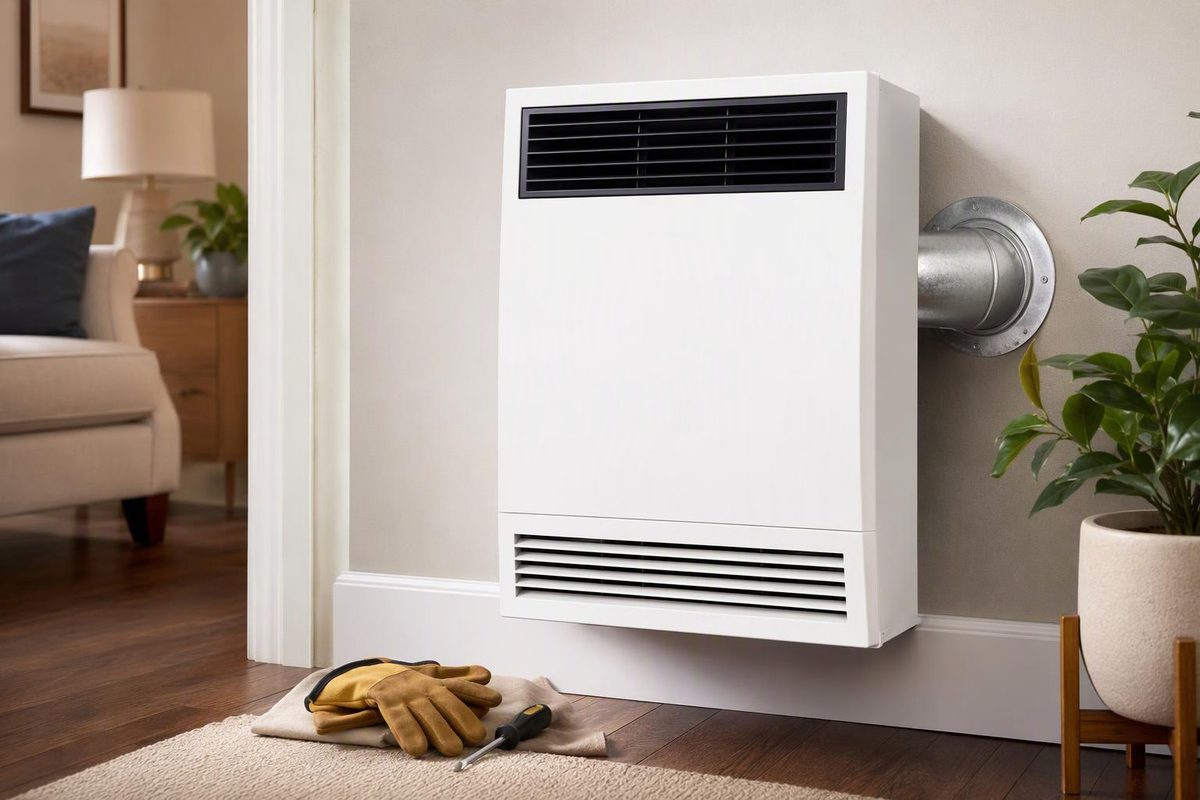
A direct vent wall furnace heats a room or zone while drawing combustion air from outdoors and exhausting combustion gases outside. Room air circulates around a sealed combustion chamber rather than through the flame. It can provide heat where a usable chimney is unavailable, but the wall location, heating capacity and electrical requirements must suit the home. Empire explains this sealed-combustion arrangement.
If you already have one, start by recording its full model number, fuel type, thermostat setting and what happens when heat is requested. If you are considering one, settle the following four questions before comparing equipment prices.
1. What space must it heat?
Define the job: one cold bedroom, an addition, an open living area or several rooms. Tell the contractor which doors normally remain closed and whether another heating system will continue serving the space. Ask how heat will reach each intended room—not just whether the heater has enough total capacity.
Request a heat-loss calculation, not a square-footage promise. Rinnai’s EX38DT installation manual specifically recommends an industry-standard BTU heat-loss calculation to size the furnace for its space. Give the installer the room dimensions, ceiling height, window details and known insulation conditions. See the manual’s installation guidelines.
Also distinguish input from output. Input describes fuel energy consumed per hour; output describes useful heat delivered. For example, Empire’s DV215 specification lists 15,000 BTU/h input—not 15,000 BTU/h delivered to the room. Ask the contractor to identify the output rating used in the sizing comparison. Empire’s DV210/DV215 manual labels the input ratings explicitly.
2. Can the vent go where the heater needs to sit?
An available patch of wall does not establish that installation is feasible. The installer must check both sides of it:
- Inside: clearance from furniture, curtains and combustible materials, plus space for servicing.
- Outside: the terminal’s relationship to opening windows, doors, air intakes, decks, grade and anticipated snow accumulation.
- Through the wall: wall thickness and compatibility with the model’s approved vent kit or extensions.
These are model- and jurisdiction-specific requirements. For example, the Rinnai EX38DT manual provides different vent kits for different wall thicknesses and separate terminal, combustible-material and service clearances. Do not borrow a clearance number from another heater’s manual. Its location and venting requirements are detailed here.
Ask the installer to identify the proposed terminal location before you approve the purchase. Gas connections, wall penetration and vent assembly are professional installation work, not homeowner checks.
3. Must it work during a power outage?
“Direct vent” describes combustion and venting, not electrical independence.
Some standing-pilot models can heat without household electricity. Empire identifies its DV210SGX and DV215SGX as heating without electricity, with optional blowers for additional circulation. By contrast, the Rinnai EX38DT uses electronic controls and requires 120-volt power; its manual states that it shuts off gas when electrical power is lost. Empire’s model information and Rinnai’s specifications show the difference.
If outage heating matters, ask: “Will this exact furnace and thermostat produce heat without household power, and what happens to its blower?” Get the answer for the complete proposed setup.
4. What does the installed quote include?
Request separate entries for the heater, thermostat, approved vent kit, gas-line work, any electrical work, wall finishing, permits and startup checks. Confirm that the specified model matches the available natural gas or propane supply. The EX38DT manual requires professional installation and use of the fuel shown on the rating plate unless a certified conversion kit is installed by a qualified service provider. Fuel conversion is not a homeowner adjustment.
A direct vent appliance is also not interchangeable with a vent-free heater. If those terms appear in competing quotes, use the vent-free heating guide to clarify the distinction before choosing.
Already installed? Safe checks before service
Stop for a gas smell, a CO alarm or suspected CO symptoms. For a gas smell, leave immediately without trying to light the heater, operating switches or using a phone indoors; call the gas supplier from outside, or the fire department if the supplier cannot be reached. Empire’s safety instructions specify this response.
For a CO alarm or suspected poisoning—such as headache, nausea or dizziness—move outside and call emergency services. Do not investigate the heater first or reenter until responders give permission. Seek prompt medical attention for suspected CO poisoning. CPSC provides the CO response guidance.
With no danger signs:
- Check the controls. Record the setpoint, displayed room temperature, timer settings and any diagnostic code before resetting anything. On a model requiring electricity, note whether it is plugged in and whether household power is available.
- Look for blocked room-air paths. Move furniture or curtains away from the heater’s required clearance area.
- Clean only the filter your manual identifies. On the EX38DT, turn the furnace off and let it cool, then clean the removable filters with a soft dry cloth or vacuum. If greasy, wash with warm soapy water, rinse and dry completely. Reinstall before operation. Do not assume every wall furnace uses a central-furnace-style disposable filter.
- Observe the outdoor terminal from a safe position. Note snow, ice, debris or visible damage. Do not dismantle the cap or vent piping. If the terminal is blocked or damaged, leave the heater off and arrange qualified service.
The EX38DT maintenance and troubleshooting sections connect blocked filters and air outlets with overheating and identify obstructed intake or exhaust as operating problems.
If shutdowns continue or the pilot repeatedly goes out, stop using the heater and arrange qualified service. Send the technician the model number, code and sequence of events. Annual professional inspection remains important even when the furnace appears to heat normally; sealed combustion does not replace maintenance or working CO alarms. CPSC recommends annual heating-system service and battery-operated or battery-backed CO alarms on every level and outside sleeping areas.