
Airflow
Vent-Free Gas Fireplace: What to Check Before Buying or Using One
Understand vent-free gas fireplace ventilation, moisture and safety limits, plus the symptoms that mean stop using it and call for help.
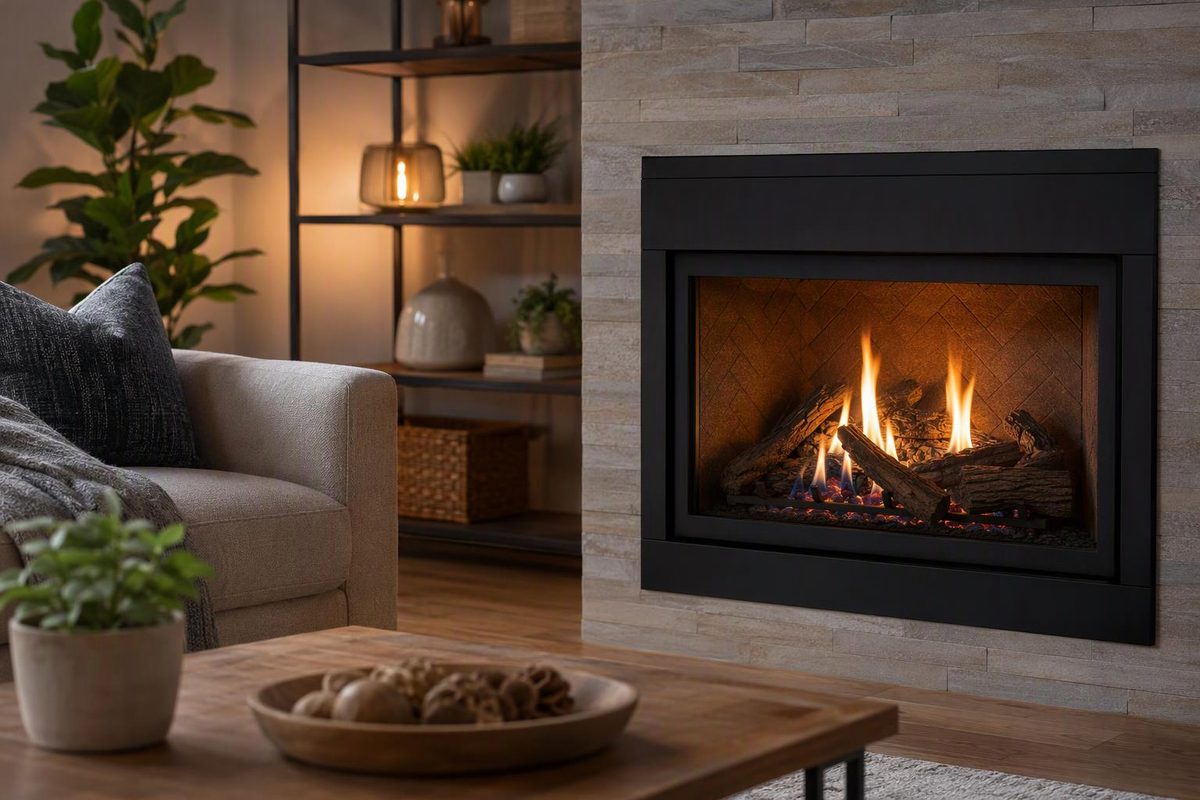
A vent-free gas fireplace, also called ventless or unvented, burns natural gas or propane without an exhaust vent to the outdoors. It takes combustion air from the room and releases combustion products into the home. That avoids an exhaust-pipe installation, but it does not eliminate the need for adequate combustion and ventilation air. Empire’s vent-free fireplace manual
For a homeowner, the decision is less about flame appearance than whether the appliance is permitted, suits the room and adds an acceptable moisture and indoor-air burden. Treat it as supplemental room heat—not a replacement for the home’s primary heating system. New York State’s heater safety guide gives that advice for unvented heaters, including those installed in fireplaces.
Stop points for an existing fireplace
Before investigating poor heating, odors or shutdowns, separate an emergency from a service problem:
- Gas smell: Leave the building immediately. Do not light an appliance, operate electrical switches or use a phone indoors. Call the gas supplier from outside; if you cannot reach them, call the fire department. These are the emergency instructions in Empire’s vent-free fireplace manual.
- CO alarm or suspected carbon monoxide symptoms: Get everyone outside to fresh air and call emergency services. Headache, dizziness, nausea or confusion during fireplace use warrant action even if the alarm is silent. Seek immediate medical attention for suspected CO poisoning. Do not stay inside to identify the source or reenter until responders permit it. Do not reuse an appliance identified as the source until trained personnel have serviced it. CPSC explains the response to CO alarms and symptoms.
- Repeated shutdowns, new soot or damaged/displaced logs: Stop using the fireplace and arrange qualified service. Do not keep relighting it, reposition logs experimentally or bypass a safety device. Empire warns that incorrect log placement can cause sooting and directs owners to obtain service for recurring shutdowns. Manufacturer instructions
Vent-free versus direct-vent: the important difference
A direct-vent gas fireplace uses a sealed combustion system: combustion air comes from outdoors and exhaust goes outdoors. Depending on the approved installation, its vent may pass through a wall or roof; an existing chimney is not necessarily required. Heat & Glo explains direct-vent operation.
A vent-free fireplace has no dedicated outdoor exhaust. That makes combustion products part of the indoor-air decision. EPA identifies carbon monoxide, nitrogen dioxide and particles as major pollutants from indoor combustion sources, including unvented gas heaters. Children and people with asthma or other respiratory diseases are particularly vulnerable to nitrogen dioxide exposure. EPA’s combustion-products guidance
If avoiding indoor combustion emissions is a priority, compare a sealed direct-vent model or an electric fireplace before choosing vent-free.
An oxygen-depletion sensor is not an all-clear signal
If your fireplace has an oxygen-depletion sensing pilot safety system, or ODS, understand its limits. Empire describes its system as sensing oxygen depletion at the pilot and shutting the heater down when adequate fresh air is unavailable. That function should not be mistaken for a CO alarm or proof that indoor air is pollutant-free. Never tamper with it. Empire manual
CPSC recommends CO alarms with battery power or battery backup on every home level and outside sleeping areas, installed according to their instructions. Alarms are added protection, not substitutes for proper installation and maintenance. CPSC also says never operate an unvented fuel-burning appliance in a room where people are sleeping. CPSC safety guidance
Check moisture and room suitability before buying
Gas combustion produces water vapor. Without an outdoor exhaust, that moisture enters the home. Empire estimates approximately 30 milliliters of water per 1,000 Btu of hourly gas input—about 0.9 liters per hour at 30,000 Btu/h. Its manual recommends supplemental use rather than whole-house heating. Water-vapor and installation guidance
Watch for window condensation and record room humidity before and during normal, permitted use. A rise is useful information, but it does not measure CO or establish safe ventilation. If the home already has condensation problems, discuss the added moisture before purchasing.
Do not choose capacity from floor area alone. The installer needs to evaluate ceiling height, connected spaces, other appliances drawing room air and how tightly the home is sealed. Empire’s combustion-air worksheet considers room volume and combined appliance inputs; it requires additional provisions for confined spaces or unusually tight construction. Those are installation criteria, not a simple heating-load calculation. Use the instructions for your exact model and applicable local codes—not another fireplace’s worksheet as approval for your installation. Empire manual
Questions to put on the installation or service request
Bring the exact model number, fuel type, rated input and any symptom history. Ask a qualified gas-appliance professional:
- Is this exact model allowed here? Confirm current requirements with the local building or fire authority, including room restrictions and permits.
- How was combustion and ventilation air verified? Ask which room volumes, openings and other appliances were included—not just whether the room “looks large enough.”
- What are its operating limits? Get the model’s clearance, screen, log-placement and supplemental-use instructions.
- What maintenance is required? Arrange inspection before use and at least annually, or more often if the manual requires it.
- If it shuts down or soots, what caused that behavior? Ask for a diagnosis rather than simply a reset or replacement part.
New York State’s safety guide supports checking local rules, professional gas installation and at least annual servicing. Leave gas connections, pressure adjustments and burner or safety-system repairs to qualified professionals.