
Cooling
Gas Wall Furnace: Identify the Type Before Troubleshooting
Identify your gas wall furnace type, check thermostat and airflow basics, and recognize pilot, venting and blower symptoms that need professional service.
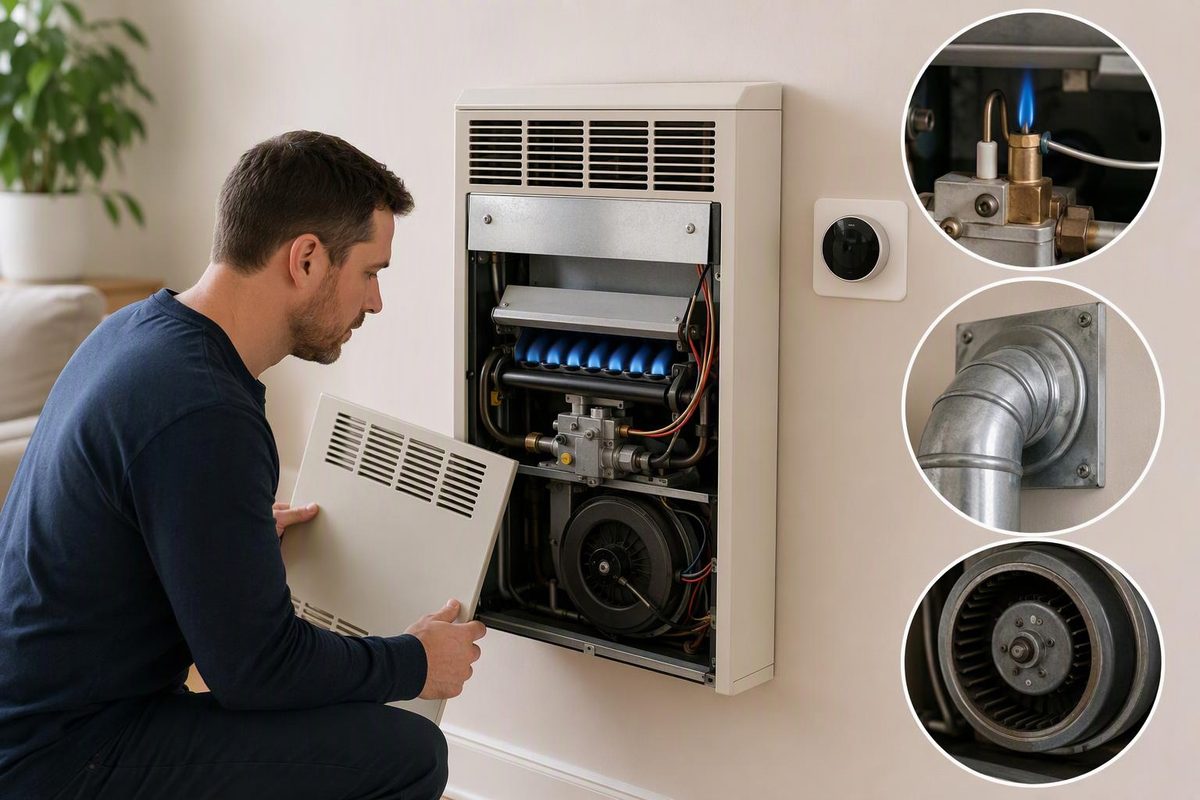
If your gas wall furnace is silent, heats unevenly or shuts off too soon, start with the thermostat setting and the model number—not a replacement part. A missing fan sound may be normal on a gravity model, while repeated burner shutdown can require a venting inspection.
A gas wall furnace heats the space near its cabinet rather than distributing heat through a central duct system. Some models can also serve an adjoining room through an approved outlet. The Williams Monterey manual, for example, describes optional rear outlets. The vent arrangement, ignition system and presence of a blower determine which checks make sense.
Stop for gas or carbon monoxide warnings
If you smell or hear gas leaking, leave immediately. Do not operate lights, the thermostat, other electrical switches or a phone inside. Contact your gas supplier from outside; if you cannot reach them, call the fire department. If a carbon monoxide alarm sounds, get everyone outside and call 911. Carbon monoxide is odorless; the absence of a gas smell does not establish safety. Follow these CPSC emergency instructions rather than troubleshooting.
Without those emergency signs, stop using the furnace and arrange inspection for new soot, abnormal flames or repeated failed ignition. Do not operate equipment that has been flooded. The Williams Monterey manual warns that abnormal combustion can produce CO and soot and requires professional inspection of water-damaged equipment.
Identify two separate features: venting and airflow
“Direct vent” describes the combustion-air and exhaust arrangement. “Gravity” or “fan type” describes how room air moves through the heater. They are not competing labels: a direct-vent furnace can have an optional blower.
| Feature | What it means for your checks |
|---|---|
| Top-vent gravity furnace | The Williams Monterey example draws combustion air from the room and exhausts through a vertical vent to the roof. Its blower is optional, so silence alone does not prove a fan failure. |
| Direct-vent furnace | The Williams model family cited here has sealed combustion: it draws combustion air from outdoors and sends exhaust outdoors through the wall. Check the exterior terminal visually from a safe location. |
| Fan-type wall furnace | A powered fan moves room air. Power supply and fan operation matter, but ignition may also depend on electricity. |
These distinctions come from the Monterey manual, Williams direct-vent manual and Empire FAW55 intermittent-pilot manual. Match instructions to your exact model.
A wall-mounted vent-free gas heater is a different category; do not apply a vented furnace manual to it. For more on through-wall equipment, see direct-vent wall furnace fit, power and safe checks.
Make these checks without opening the furnace
- Confirm the heat request. Set the thermostat above the room temperature. If it has selectable modes, confirm Heat. Check batteries only if that thermostat uses them. Note whether a lamp, sunlight or warm discharge air could be heating the thermostat before the rest of the room warms.
- Record the model and fuel. Photograph an accessible rating label or use existing paperwork. Do not remove a sealed combustion cover to find it. Note natural gas versus propane and standing-pilot versus electronic ignition if the manual identifies them.
- Check room-air clearance. Move furniture, curtains and stored items away from the heater’s intake and discharge openings, observing the manual’s clearances. Never dry clothing on the cabinet. Wall furnace surfaces can become hot enough to cause burns.
- Check filter instructions—not central-furnace assumptions. Look in the model’s maintenance section to see whether a serviceable filter is fitted. Replace or clean only as specified; do not add filter material over a grille. Internal burner or blower cleaning is a separate service task.
- Check accessible power controls only if applicable. Note a switched-off blower selector, unplugged accessory or tripped breaker. Do not open wiring compartments or repeatedly reset a breaker. Some standing-pilot models need no electrical power for heat, although an optional blower does; electronic models may need power for ignition.
- Look for visible vent obstruction. From ground level, note snow, vegetation or obvious damage around an exterior terminal. Do not dismantle the cap, insert tools or climb onto the roof to investigate. If you see a blockage or damage, leave the furnace off pending correction.
The Williams direct-vent manual specifies unobstructed air paths and explains the thermostat-location and power considerations for those models. CPSC warns that snow-blocked furnace vents can cause CO buildup.
Describe the symptom before naming the repair
Pilot will not stay lit: Report whether it goes out immediately after lighting or later during operation. That does not prove a bad thermocouple. The Monterey troubleshooting chart lists pilot-generator output, connections, wiring and the gas valve among possible causes. Leave gas-pressure adjustments, pilot cleaning and component testing to a qualified technician. Do not attempt to light an electronic pilot by hand; the Empire FAW55 manual explicitly prohibits this.
Pilot stays lit, but the main burner does not start: Confirm the thermostat is requesting heat, then call for service if it remains inactive. On the Monterey, a vent-safety trip is one possible cause alongside thermostat, generator and valve faults.
Burner shuts off before the room warms: Record how long it runs and whether the thermostat has reached its setting. Thermostat location can cause premature shutdown, but repeated burner dropout can also involve the vent system. Do not bypass a safety switch or repeatedly reset it to keep the furnace running. The manufacturer warns that tampering with vent protection can result in CO poisoning. These fault categories are documented in the Monterey manual.
Heat is present, but the blower is quiet: First confirm that a blower exists. On the Monterey’s automatic accessory, the fan starts after the furnace warms and continues after the burner stops. Check its external selector against the manual’s operating sequence and accessory instructions before reporting a failure.
The heater’s room is warm, but another room is cold: Record door positions and whether that room has an approved furnace outlet. This is a heat-distribution question, not automatic evidence that the heater needs replacing with a larger model.
What to ask the contractor
Send the model number, fuel type, thermostat setting and a short description of the burner/fan sequence. Then ask:
- What test distinguishes the suspected part from a control, airflow or venting problem?
- If a safety switch opened, what caused it—and how will safe operation be verified?
- Does the service include inspection of the vent, combustion-air supply, burner and circulating-air passages?
- If replacement is proposed, what heating-load calculation supports the size, and can the existing vent and gas supply serve the new model?
Schedule professional inspection at least annually; the Empire wall furnace manual specifies inspection before use and at least yearly. These checks are general homeowner guidance, not instructions for gas, vent or electrical repairs.