
System Decisions
Check the Dryer Exhaust Vent Before Blaming the Dryer
Long dry times can point to a restricted dryer exhaust vent. Learn safe checks, duct requirements and when cleaning or appliance service is needed.
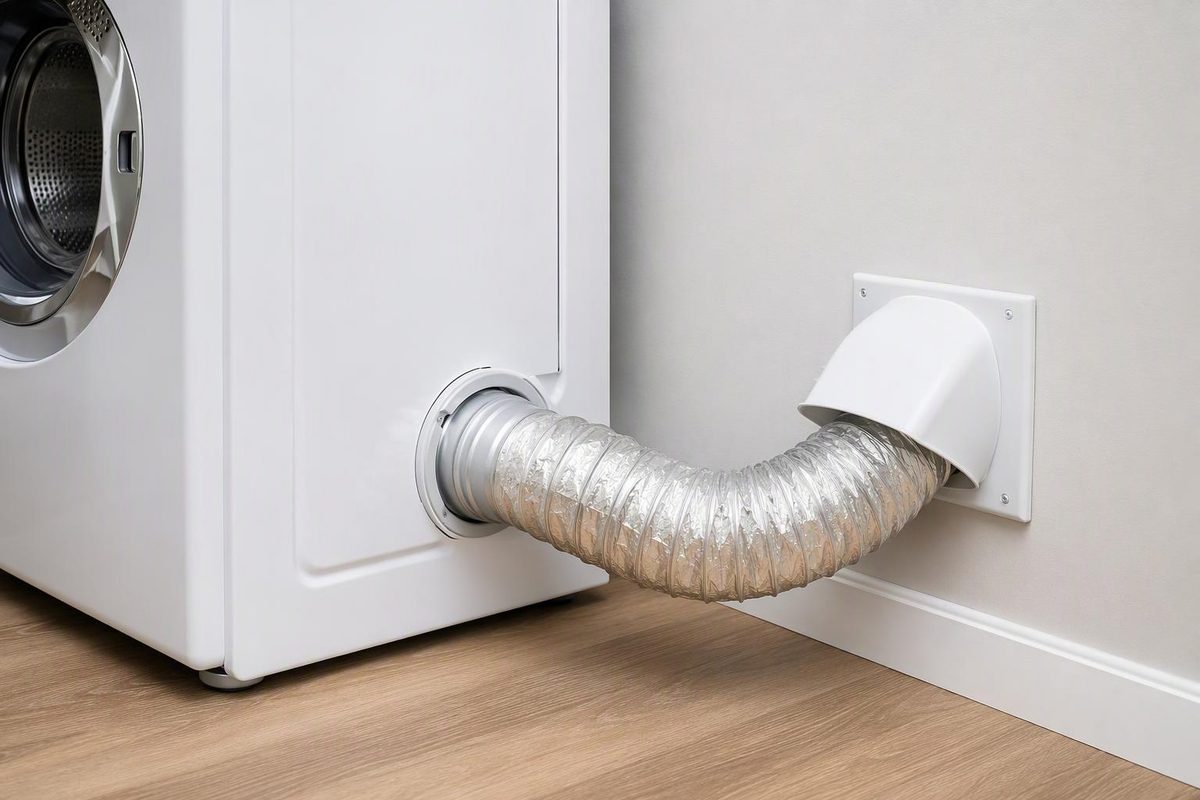
Clothes needing a second cycle, an unusually hot dryer or moisture collecting behind it can point to a restricted dryer exhaust vent—not necessarily a failed dryer. Start with the lint screen, the visible duct behind the machine and the outdoor outlet. These observations can help you decide whether to arrange vent cleaning, duct repair or appliance service.
A vented dryer sends warm, moisture-laden air outdoors; a gas dryer also sends combustion exhaust through that route. It is not an HVAC supply or return duct. This guide applies to vented dryers, not purpose-built ventless models. Whirlpool explains the exhaust requirements and the ventless distinction.
Stop first for heat, smoke or gas warnings
Stop using the dryer if there is a burning odor or abnormal overheating. Do not keep running cycles to see whether the problem clears, or restart it before inspection. A restricted exhaust can trap heat and lint, creating a fire hazard. The Department of Energy’s Building America guide explains how blocked exhaust can cause dangerous overheating.
Smoke or visible fire means leave, stay outside and call emergency services. USFA’s fire-escape guidance prioritizes getting out and calling the fire department from outside.
If you smell gas, do not operate switches, unplug the dryer or use a phone inside. Leave the building and call the gas supplier from outside; if you cannot reach the supplier, call the fire department. Whirlpool’s gas-safety instructions specify these precautions.
Three checks without dismantling the dryer
1. Clean the lint screen and record what changed
Clean the screen before each load. A clean screen does not establish that the exhaust duct is clear: fine lint can pass through it and accumulate downstream.
Record whether comparable loads now take longer, whether the dryer displays a vent warning and whether you see steam inside the dryer or water behind it. Whirlpool lists long drying times, excessive warmth and moisture accumulation as possible signs of restricted venting—not proof of a particular fault. Its troubleshooting guidance describes these symptoms.
2. Look at the connection behind the machine
With the dryer off, inspect whatever is visible without moving it. Look for:
- A crushed or sharply kinked connector.
- A disconnected duct or loose joint.
- Tears, damage or lint collecting around the connection.
- Excess connector length folded into tight loops.
The U.S. Fire Administration recommends checking behind the dryer for damaged, crushed or restricted venting. Its dryer-safety flyer also calls for professional installation and service.
Do not pull a gas dryer forward if doing so could strain its gas connection. Leave gas-line disconnection and reconnection to a qualified professional; Whirlpool requires qualified installation and service. For accessible maintenance on an electric dryer, unplug it first and follow its manual; moving the appliance requires help. Whirlpool’s maintenance guidance covers those precautions.
3. Observe the outdoor outlet
If there are no danger signs or known obstructions, observe an outlet you can reach safely from the ground during a normal drying cycle. Its damper should open while the dryer runs. Look for visible lint or debris obstructing it; do not reach inside while the machine is running. USFA recommends checking that the outdoor covering opens during operation. If it stays closed or is visibly blocked, stop using the dryer pending inspection.
A moving flap is only a basic observation—it does not confirm adequate airflow or a clean duct. If the outlet is on a roof or otherwise inaccessible, arrange inspection rather than climbing to check it.
What a suitable exhaust route looks like
For a typical U.S. residential installation, use these points to question the setup—not as a substitute for the dryer manual or locally adopted code:
| Part | What to verify |
|---|---|
| Permanent exhaust duct | Smooth, rigid metal, generally 4 inches in diameter—not plastic or PVC. |
| Connector behind the dryer | A manufacturer-approved transition duct. The 2021 IRC calls for a single UL 2158A-listed length, no longer than 8 feet and not concealed within construction. Keep it short and uncrushed. |
| Route length | The dryer’s permitted length, accounting for bends and the outlet type. The 2021 IRC’s specified-length method starts at 35 feet, excluding the transition duct; fittings reduce that allowance. Manufacturer instructions can specify different limits. |
| Outdoor termination | A backdraft damper without a lint-catching screen; discharge outdoors, not into an attic, crawl space or garage. |
These checks follow Building America’s dryer-venting guidance and 2021 IRC Section M1502. Do not assume that foil-looking flexible duct is acceptable because it is sold as vent hose: Whirlpool’s specifications prohibit foil-type duct and require any flexible metal duct to be a manufacturer-approved type.
An indoor lint-catching box is not a substitute for outdoor exhaust. It adds moisture to the home, and gas-dryer combustion exhaust must go outdoors. Building America and Whirlpool explain those concerns.
Cleaning, duct repair or appliance service?
Arrange vent cleaning or inspection for worsening dry times, a vent warning, a stuck outlet damper or visible buildup. Building America recommends professional exhaust-duct cleaning at least annually; do not wait for that interval when symptoms appear. Cleaning the lint screen is a separate, every-load task. See its homeowner recommendations.
Ask for duct repair, not just cleaning, if the connector is crushed, disconnected or damaged, or the route uses unsuitable materials. Removing lint will not correct a restrictive layout.
Arrange appliance diagnosis if the complete exhaust route has been checked and drying remains poor. Give the technician the model number, warning code, typical load and cycle, drying-time change and vent-cleaning history. Ask:
- Did you inspect the entire route, including the outdoor damper?
- Does the length and number of bends meet this model’s instructions?
- How did you verify airflow or back pressure against the manufacturer’s requirements?
- If the exhaust is satisfactory, what dryer fault does the testing support?
Those questions separate a vent problem from an appliance diagnosis without requiring you to dismantle or modify either system.